
 Custom Hoodie Programs Based on Buyer Specifications
Drevanti develops custom and OEM hoodies for apparel brands, streetwear labels, importers, wholesalers, distributors and private-label programs. Orders can be reviewed from a complete tech pack, size chart, artwork, reference garment or a clear set of product requirements.
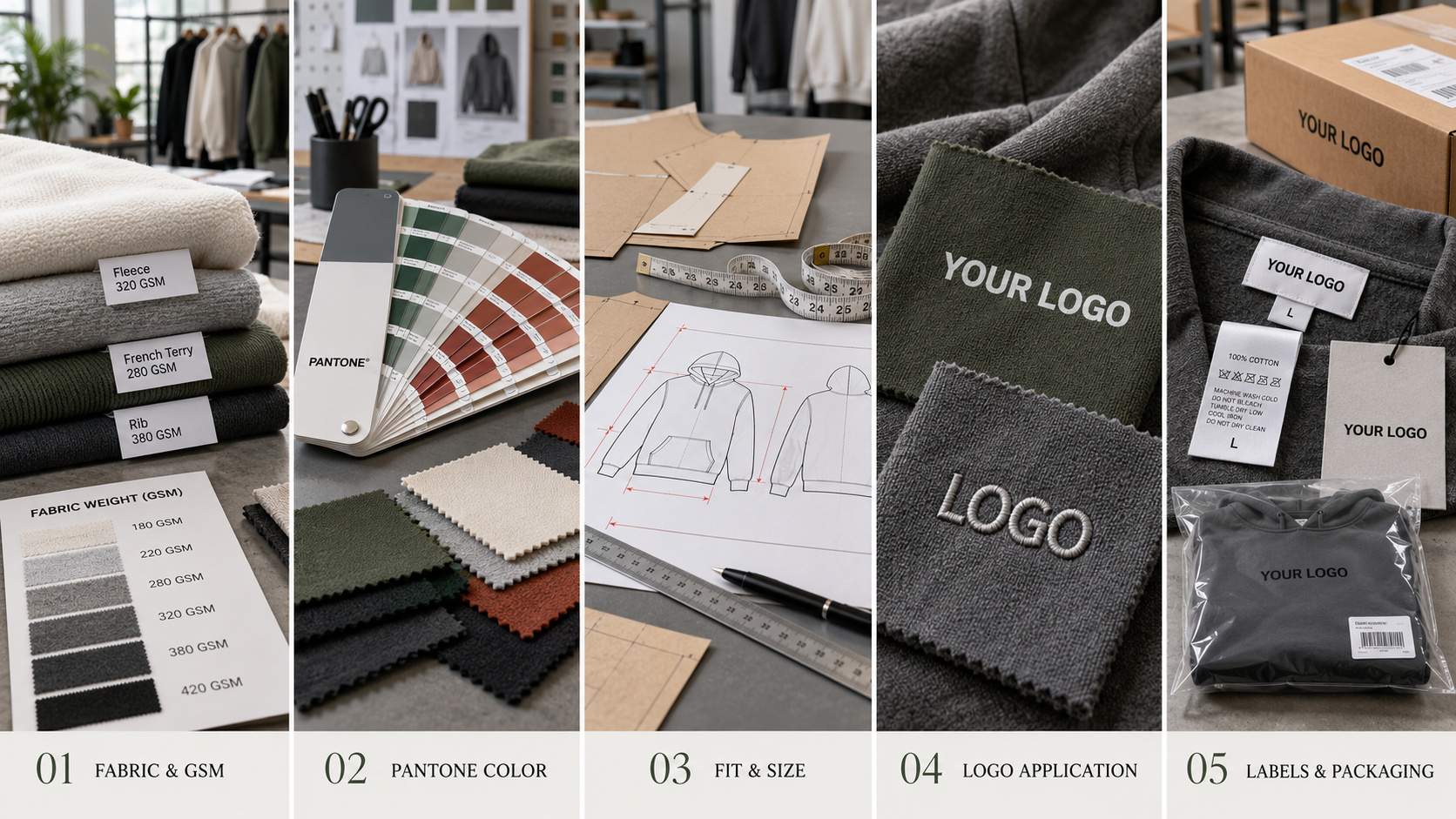
Customization may cover fabric composition, GSM, garment fit, size grading, Pantone-based colors, printing, embroidery, patches, labels, trims and packing details. These elements are reviewed together because a change in one area can affect the sample cost, minimum order quantity, production time or finished appearance.
Standard hoodie programs usually start from 100–300 pieces per style. Custom-dyed fabrics, special colors and more detailed private-label specifications normally require 300–500 pieces per style/color or more.
Fabric, GSM and Color Selection
Fabric should be selected according to the target season, hoodie structure, required handfeel, intended use and price level. Available directions include cotton, cotton/polyester blends, CVC, French terry, brushed fleece, polyester fleece and matching rib fabrics.
GSM alone does not determine the final result. Fiber composition, knitting structure, brushing, surface finish and garment fit also influence warmth, drape and bulk. Buyers can review the available options through our Fabric & GSM Customization process before confirming the sample material.
Pantone-based color development can be arranged where suitable. Custom colors may require a higher fabric quantity and additional preparation time. The approved fabric quality and color reference should be recorded before bulk cutting.
 Fit, Pattern and Size Development
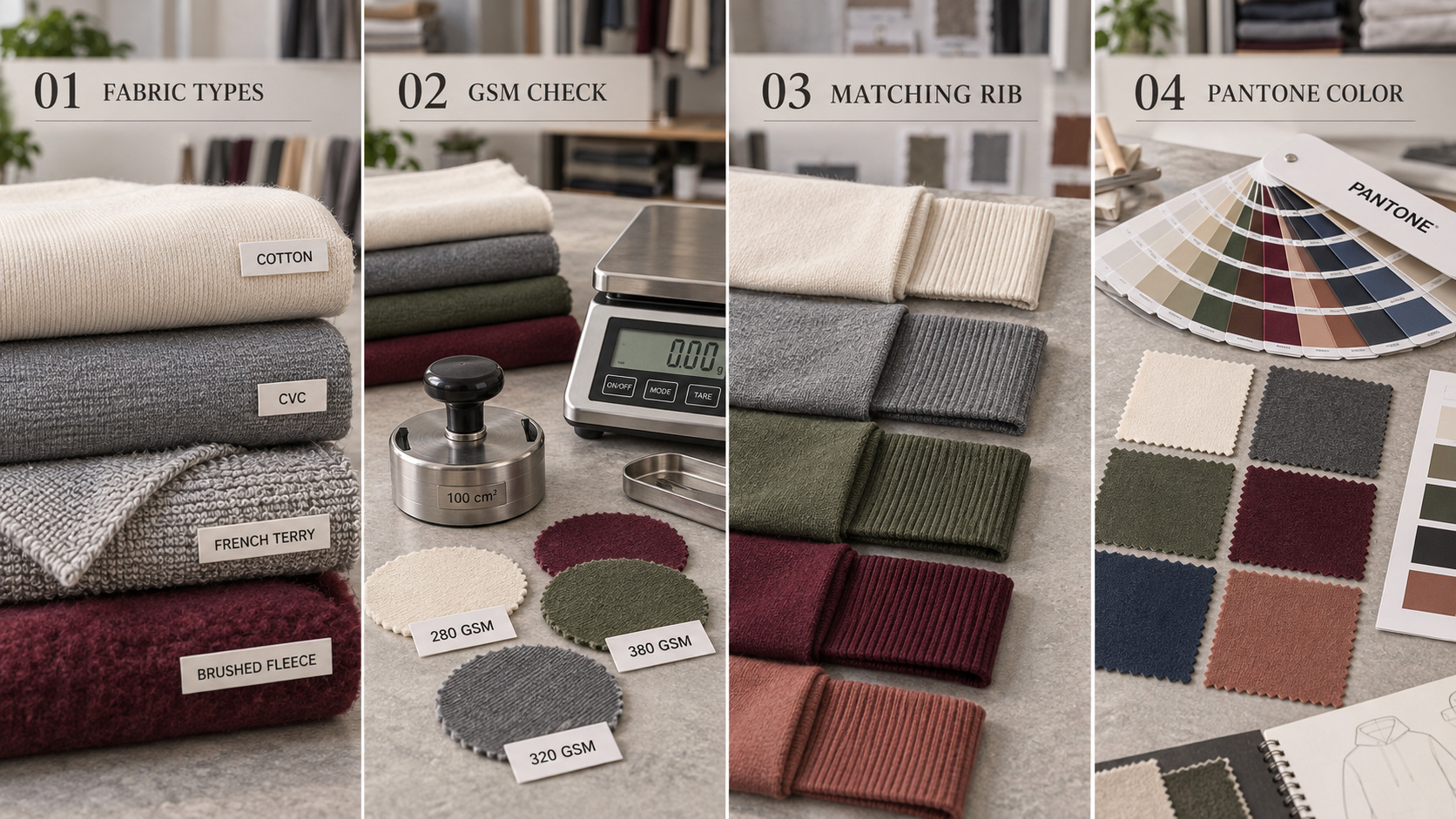
Regular, oversized and buyer-defined fits can be developed from a tech pack, measurement chart or physical reference garment. Important details include chest width, body length, shoulder position, sleeve length, hood dimensions, pocket placement and cuff or hem proportions.
For oversized hoodies, increasing every measurement by the same amount does not normally create a balanced fit. Shoulder drop, sleeve volume, body width and garment length need to be reviewed as a complete pattern. The Fit & Size Development page explains how measurement points, patterns and size grading are confirmed before bulk production.
Buyers should provide the intended market, size range and measurement tolerances where available. Sample measurements are checked against the approved chart, and any necessary revisions should be completed before the pre-production reference is confirmed.
Logo, Artwork and Branding Confirmation
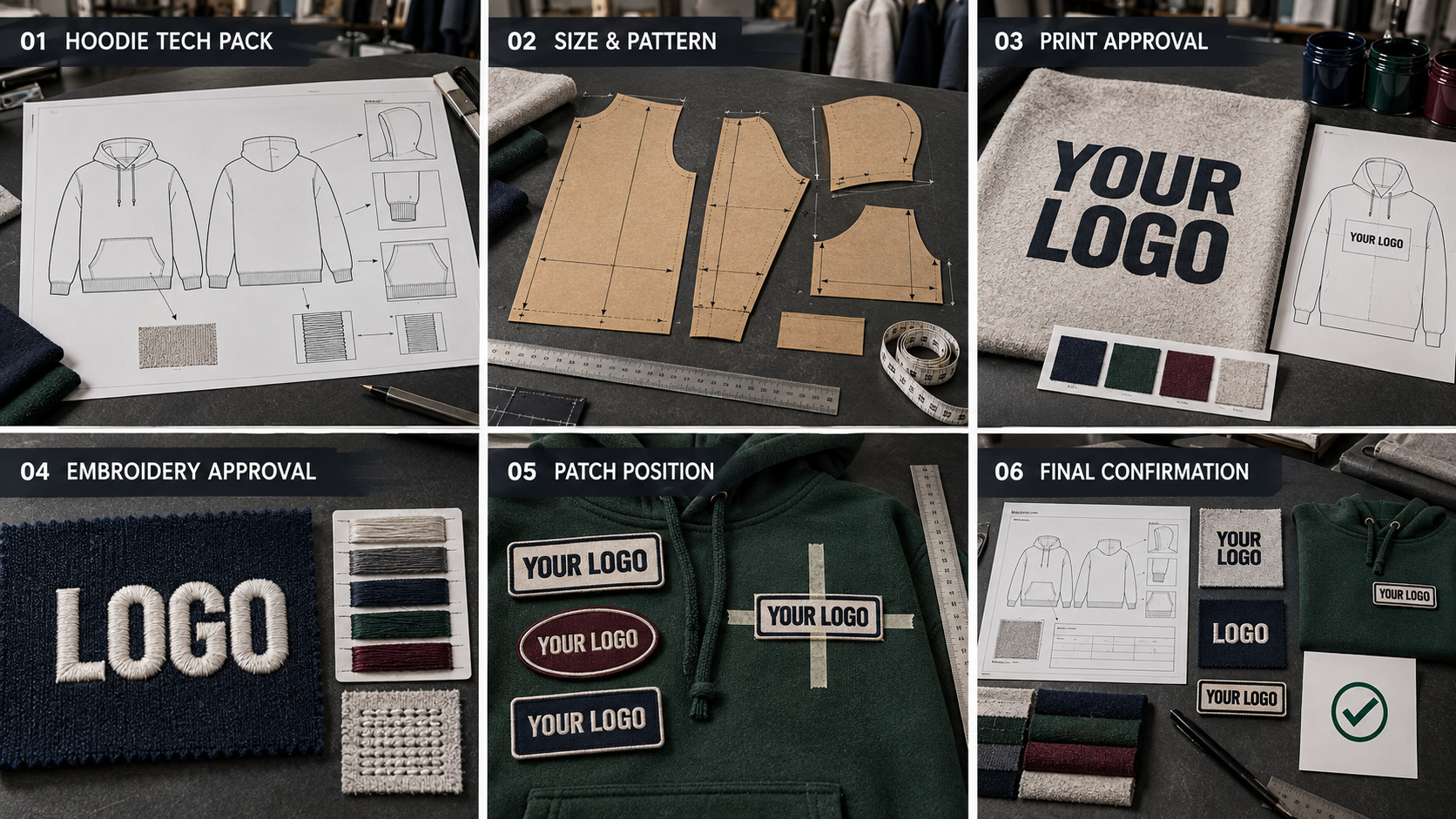
Printing, embroidery and patches can be developed from approved buyer artwork. The artwork file should define the logo dimensions, colors, placement and required visual effect. Fabric weight, surface texture and stretch may affect which application method is suitable.
The sample stage is used to review logo scale, position, color and appearance on the selected fabric. Details should not be approved only from a digital mockup when the physical result is important. Our Logo Printing & Embroidery options can be evaluated according to the garment construction and order quantity.
Neck labels, care labels, size labels and hangtags should also be checked for wording, dimensions, attachment position and market-specific information before production.
 Private Labels, Trims and Packaging
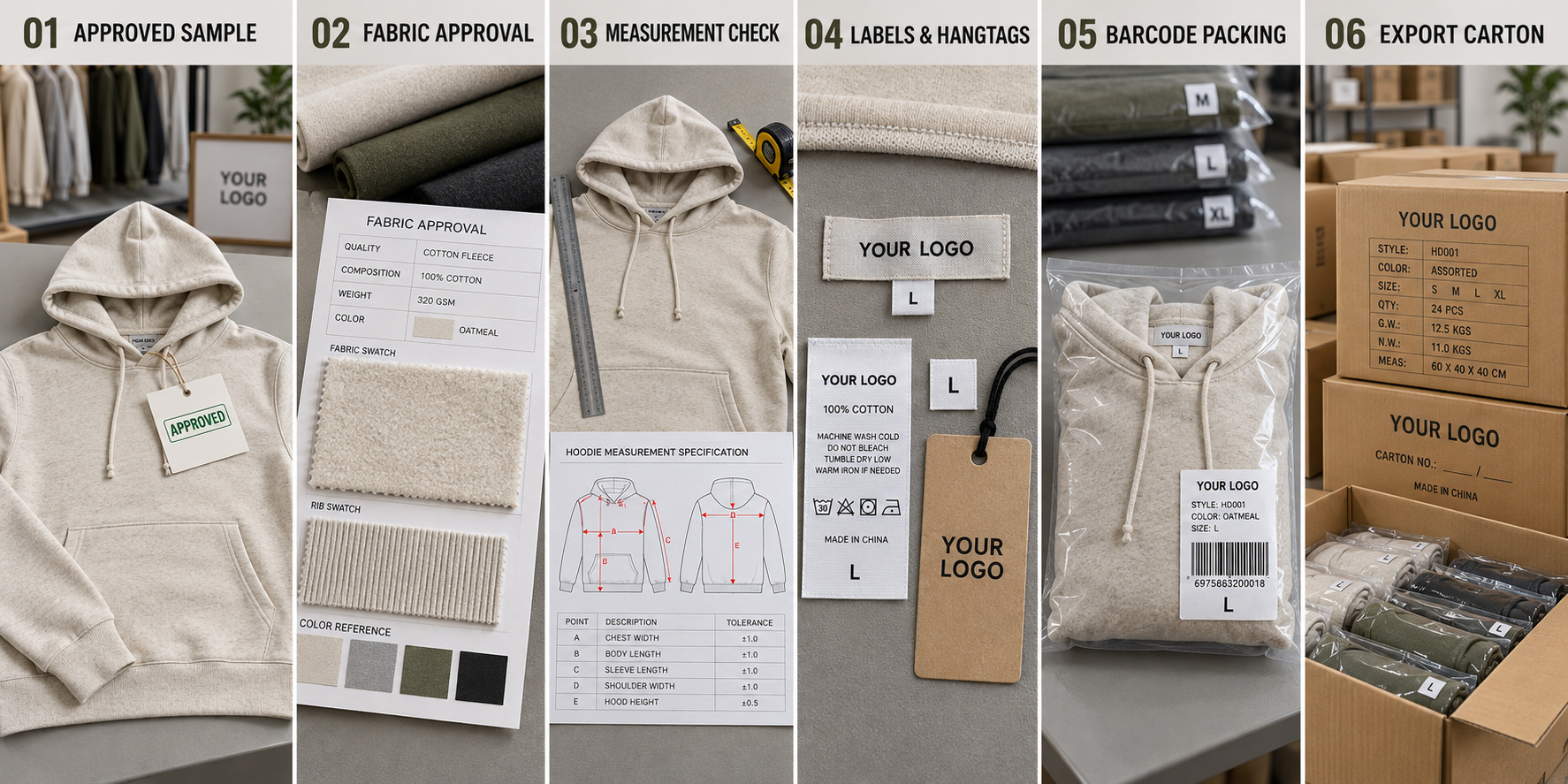
Private-label programs may include branded neck labels, care labels, size labels, hangtags, barcode labels, drawcords, zippers and selected trims. Packaging options can include individual poly bags, size stickers, branded bags and export cartons.
Buyers should provide final label artwork, barcode data, size assortment, packing method and carton-mark requirements. Packaging details influence both presentation and shipment preparation, especially when goods are divided by color, size, store or warehouse destination.
The available Private Label & Custom Packaging process should be confirmed together with the garment sample rather than left until the end of production.
Sample Development and Pre-Production Approval
Basic hoodie samples usually take around 7–12 days. More customized developments generally require 10–18 days, depending on fabric sourcing, fit changes, trims, color and branding complexity.
Before sampling, we review the style, quantity, fabric, GSM, size range, artwork, labels, packaging and delivery target. The completed sample is then checked for construction, measurements, workmanship and branded details.
Before bulk production, the buyer should approve the fabric, color, fit, size chart, logo application, labels, trims and packaging. The approved sample and confirmed order specification become the reference for fabric preparation, cutting, sewing, finishing and inspection.
 Bulk Production, Inspection and Delivery Preparation
Bulk production normally takes around 25–40 days after sample approval and specification confirmation. Custom fabrics, complex decoration, special trims and peak production periods may require additional time.
During production, relevant checks cover fabric specifications, cutting, sewing, branding, garment measurements, finishing, labels and packing. Third-party composition, colorfastness or shrinkage testing can be arranged when required by the buyer. Final inspection reviews appearance, quantities, measurements, barcodes and packing details before shipment preparation.
Orders may be prepared under EXW, FOB, CIF or DDP terms where applicable. The available option depends on the destination, order requirements and delivery arrangement.
Information Required for a Custom Hoodie Quote
For an initial quotation, please provide:
- Hoodie style and intended fit
- Estimated quantity per style and color
- Preferred fabric composition and target GSM
- Size range or measurement chart
- Pantone colors or color references
- Logo artwork, dimensions and placement
- Label, trim and packaging requirements
- Destination market and requested delivery time
- Tech pack, product photos or reference sample details
Complete specifications allow us to assess material availability, MOQ, sample requirements, production time and packing needs more accurately.