
Selecting Fabric for the Intended Hoodie Program
Fabric selection affects the hoodie’s weight, warmth, surface appearance, drape, fit and branding result. Drevanti works with apparel brands, importers, wholesalers and private-label buyers to select materials according to the intended season, target market, garment construction and price level.
Available directions include cotton, cotton/polyester blends, CVC, French terry, brushed fleece, polyester fleece and matching rib fabrics. Final availability depends on the required composition, GSM, color, order quantity and sourcing conditions.
Buyers can include fabric requirements in a tech pack or send a physical garment, fabric swatch or product reference for review. When the exact fabric is unavailable, a comparable option can be proposed for sample confirmation.
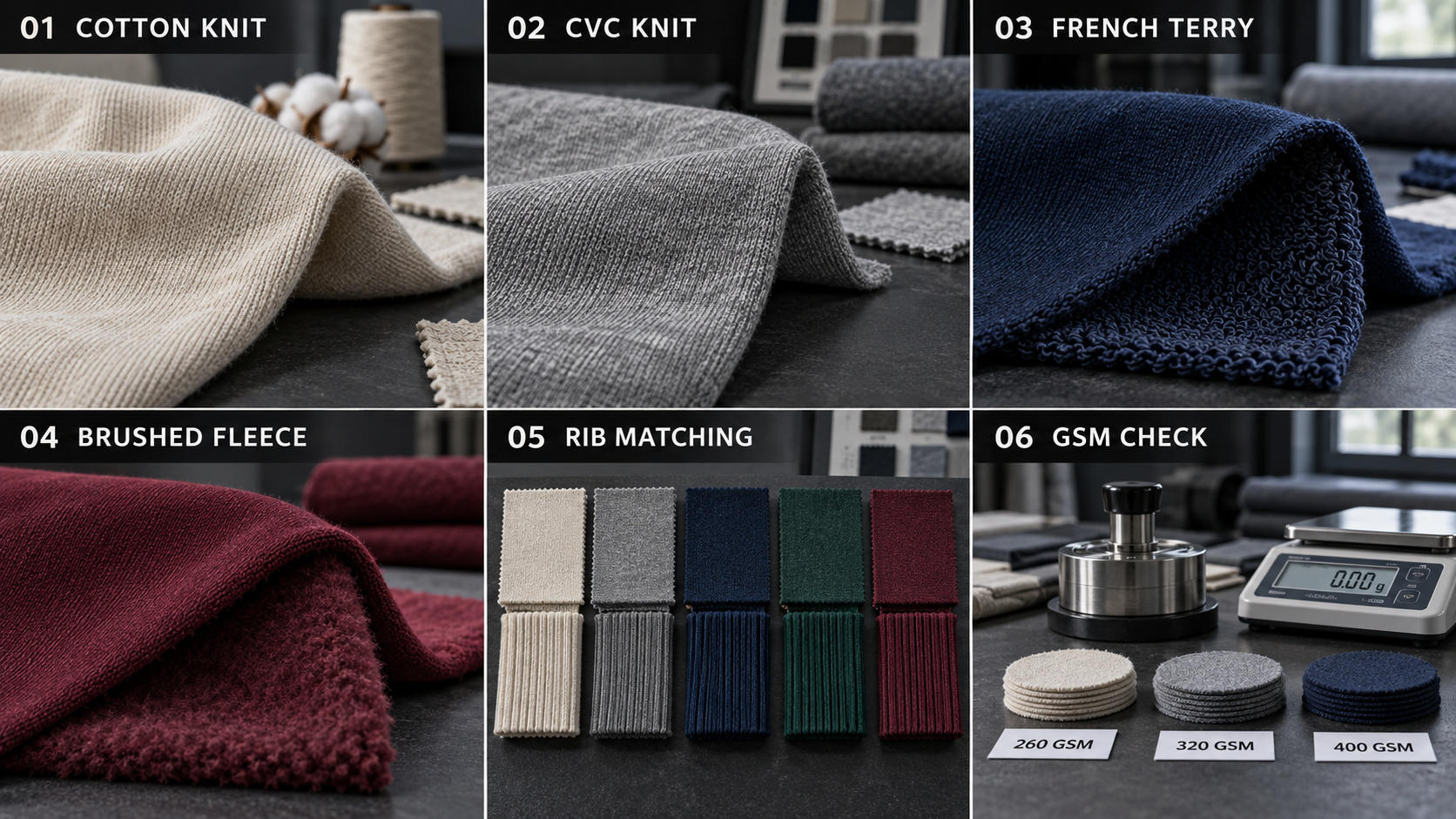 Cotton, CVC, French Terry and Fleece Options
Cotton fabrics are commonly selected for a natural handfeel and print-friendly surface. Cotton/polyester and CVC blends can be considered when the project requires a different balance of softness, stability, durability and cost.
French terry has a smoother face with visible loops on the reverse. It is often used for transitional seasons, layering pieces and hoodies that do not require a heavily brushed interior.
Brushed fleece provides a softer and warmer inner surface. The brushing level, fiber composition and fabric density influence the final bulk, warmth and handfeel. Polyester fleece may also be reviewed for suitable promotional, sports or price-sensitive programs.
The fabric name alone is not enough for production. Composition, knit structure, GSM, finishing and approved handfeel should be recorded together.
How GSM Affects the Finished Hoodie
GSM refers to fabric weight per square meter, but it should not be used as the only quality measurement. Two fabrics with the same GSM can behave differently because of their fiber content, knitting structure, brushing and finishing.
A higher GSM may create a fuller, heavier garment, but it can also affect drape, seam thickness, hood balance and embroidery performance. A lighter fabric may suit layering or warmer markets but requires appropriate construction and branding methods.
Fit should also be considered. Oversized hoodies may need enough fabric body to maintain the intended silhouette, while regular-fit programs may prioritize comfort, movement or seasonal wear. Fabric selection should therefore be coordinated with the project’s Fit & Size Development requirements.
Rib Fabric and Color Matching
Cuffs and hems normally require rib fabric with suitable stretch and recovery. The rib should be reviewed alongside the main fabric for color, weight, texture and finished appearance.
Pantone-based color development can be arranged where suitable. Custom-dyed fabrics and exact color requirements may increase the MOQ and preparation time. Buyers can review the separate Pantone Color Customization process for lab dips, color references and approval requirements.
Minor shade variation may occur between different materials because the main fabric, rib and thread can absorb dye differently. These components should be compared together during sample approval.
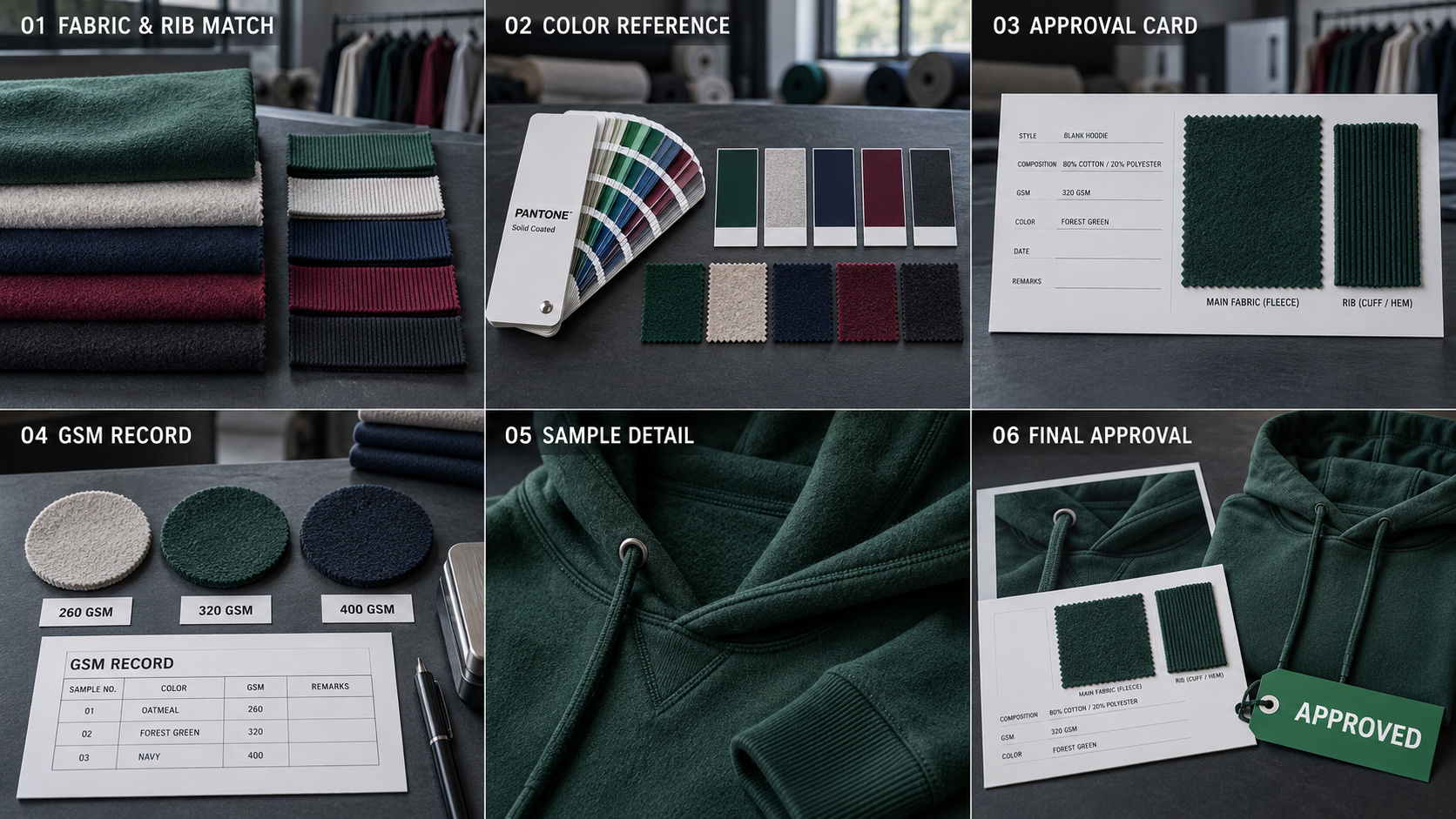 Fabric Sampling and Approval
Before bulk production, the fabric should be confirmed for:
- Fiber composition
- Target GSM
- Color and shade
- Surface and reverse structure
- Handfeel and brushing
- Main fabric and rib matching
- Suitability for printing or embroidery
- Expected shrinkage and care requirements
Basic hoodie samples usually take around 7–12 days. Developments involving special fabrics, custom colors or additional fit work generally require 10–18 days.
The approved fabric and completed sample become production references. Incoming bulk material is reviewed through the Fabric Inspection & Preparation stage before cutting.
Testing, MOQ and Production Considerations
Third-party fabric composition, colorfastness or shrinkage testing can be arranged when required by the buyer. Testing requirements should be provided before production so the applicable method, sample quantity, cost and timing can be reviewed.
Standard hoodie programs usually start from 100–300 pieces per style. Custom-dyed fabrics, special colors or more complex material requirements normally require 300–500 pieces per style/color or more.
For a fabric and GSM quotation, buyers should provide the hoodie style, intended season, preferred composition, target GSM, color quantity, order quantity, size range, branding method and delivery destination.