
Finalizing Hoodies After Assembly
Finishing begins after hoodie sewing, decoration and component assembly are complete. At this stage, each garment should match the approved sample and confirmed order specification in measurements, appearance, workmanship and branded details.
The process normally includes thread trimming, surface cleaning, garment shaping, measurement checks and the correction or separation of non-conforming pieces. It is especially important for private-label and repeat orders because small differences in length, sleeve balance, pocket position or logo placement can affect consistency across the shipment.
Garments received from the Hoodie Sewing & Assembly stage are organized by style, color and size before finishing checks begin.
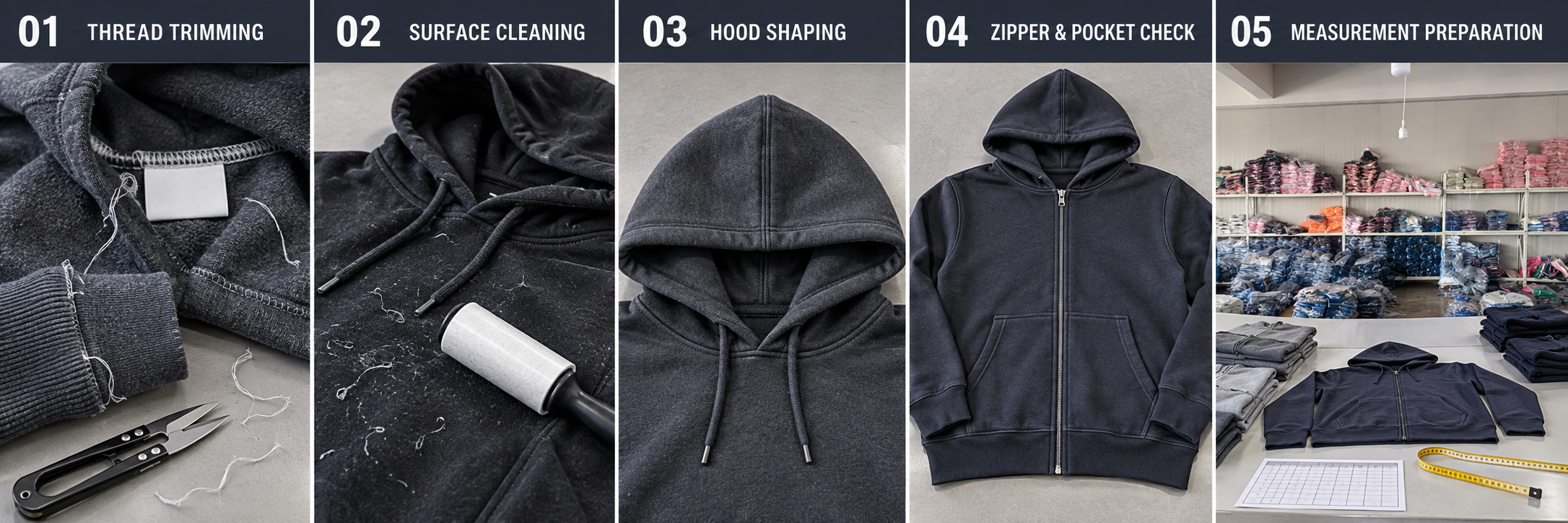 Thread Trimming and Surface Review
Loose threads are removed around seams, labels, pockets, cuffs, hems and decoration areas. The garment surface is then reviewed for visible marks, fabric damage, oil stains, holes or other appearance issues.
Special attention is given to areas that are handled repeatedly during production, including the neckline, hood edge, sleeve opening, pocket corners and bottom rib. Brushed fleece and dark-colored garments may also require cleaning to remove loose fibers, dust or thread fragments.
Garment shaping or pressing can be arranged where appropriate for the fabric and construction. Excessive heat or pressure should be avoided because it may affect fleece texture, printed graphics, rib recovery or fabric appearance.
Measuring Finished Garments
Finished garments are laid flat and measured according to the confirmed measurement method. Common points include chest width, body length, shoulder width, sleeve length, cuff opening, bottom opening, hood dimensions and pocket placement.
Zip-up hoodies may also require checks for zipper length, front-edge balance and matching hem levels. Oversized styles need attention to shoulder drop, body width and sleeve volume so the intended silhouette is maintained across the size range.
Measurements are compared with the approved size chart and agreed tolerance. Buyers with specific measurement requirements should confirm them during Fit & Size Development rather than waiting until bulk production is complete.
Appearance and Construction Checks
Inspection also covers overall garment balance and visible workmanship. The hood should appear symmetrical, sleeves should hang evenly, pockets should remain level, and cuffs and bottom ribs should not show excessive twisting or waviness.
Seams are checked for skipped stitches, loose stitching, puckering and open sections. Zippers, drawcords and selected trims are reviewed for correct attachment and basic operation according to the approved specification.
Printed, embroidered and patched details are compared with the approved artwork and placement reference. Further production considerations are explained on the Printing & Embroidery page.
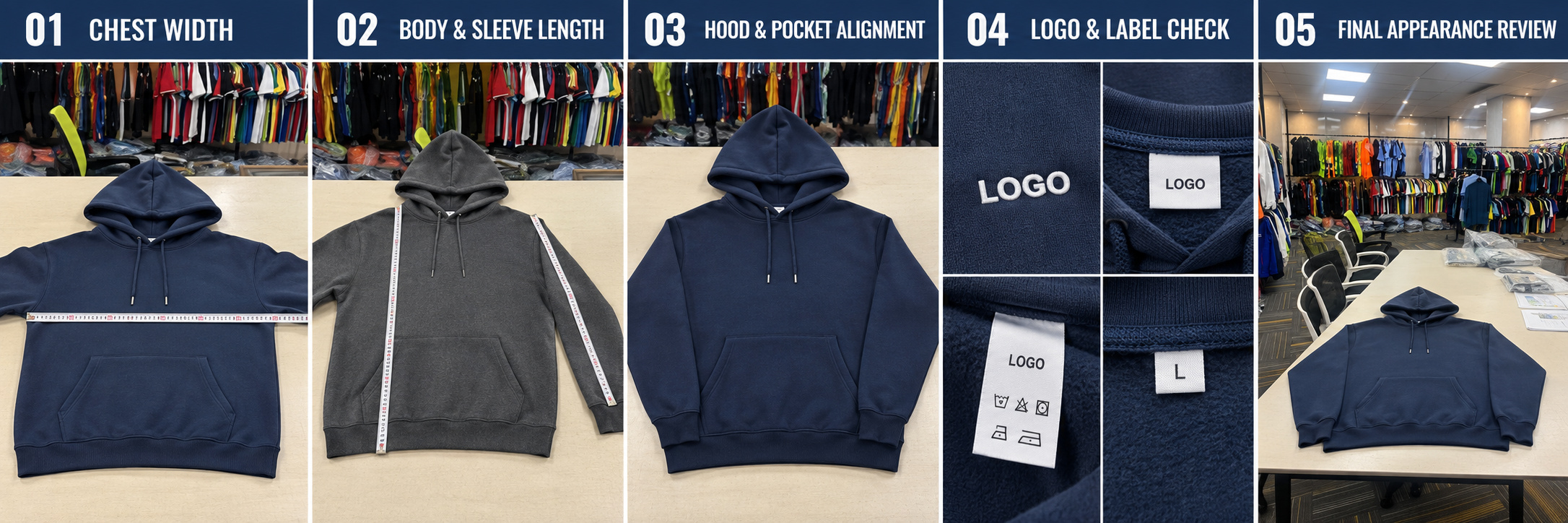 Labels and Private-Label Details
Neck labels, care labels, size labels and hangtags are checked for the correct content, position and size allocation. Barcode labels and packaging details should match the buyer’s confirmed order information before garments are packed.
These checks are particularly important when one order includes several colors, sizes or destination-specific label requirements. Buyers can confirm label and packing specifications through our Private Label & Custom Packaging process.
Preparing Approved Garments for Packing
Garments that meet the confirmed requirements proceed to folding and packing. Pieces requiring correction are separated for repair and reinspection rather than mixed with approved goods.
Before production, buyers should provide the approved size chart, measurement method, tolerance, artwork references, label files, packaging instructions and size-color breakdown. Clear inspection standards help reduce disputes and provide a consistent reference from sample approval through bulk packing.