
Hoodie Fit Development Based on Buyer Requirements
Drevanti develops regular, oversized and buyer-defined hoodie fits for apparel brands, streetwear labels, importers and private-label buyers. Development can begin from a tech pack, measurement chart, technical drawing, physical garment or clear product reference.
Before pattern work starts, we review the intended wearer, target market, hoodie construction, fabric, base size and complete size range. Men’s regular-fit hoodies, women’s oversized hoodies and kids’ zip-up styles require different proportions and grading methods.
Fabric weight and structure also affect the finished fit. A heavy brushed fleece, lighter French terry or cotton blend may produce different drape, thickness and shrinkage. Fit development should therefore be coordinated with the selected Fabric & GSM Customization requirements.
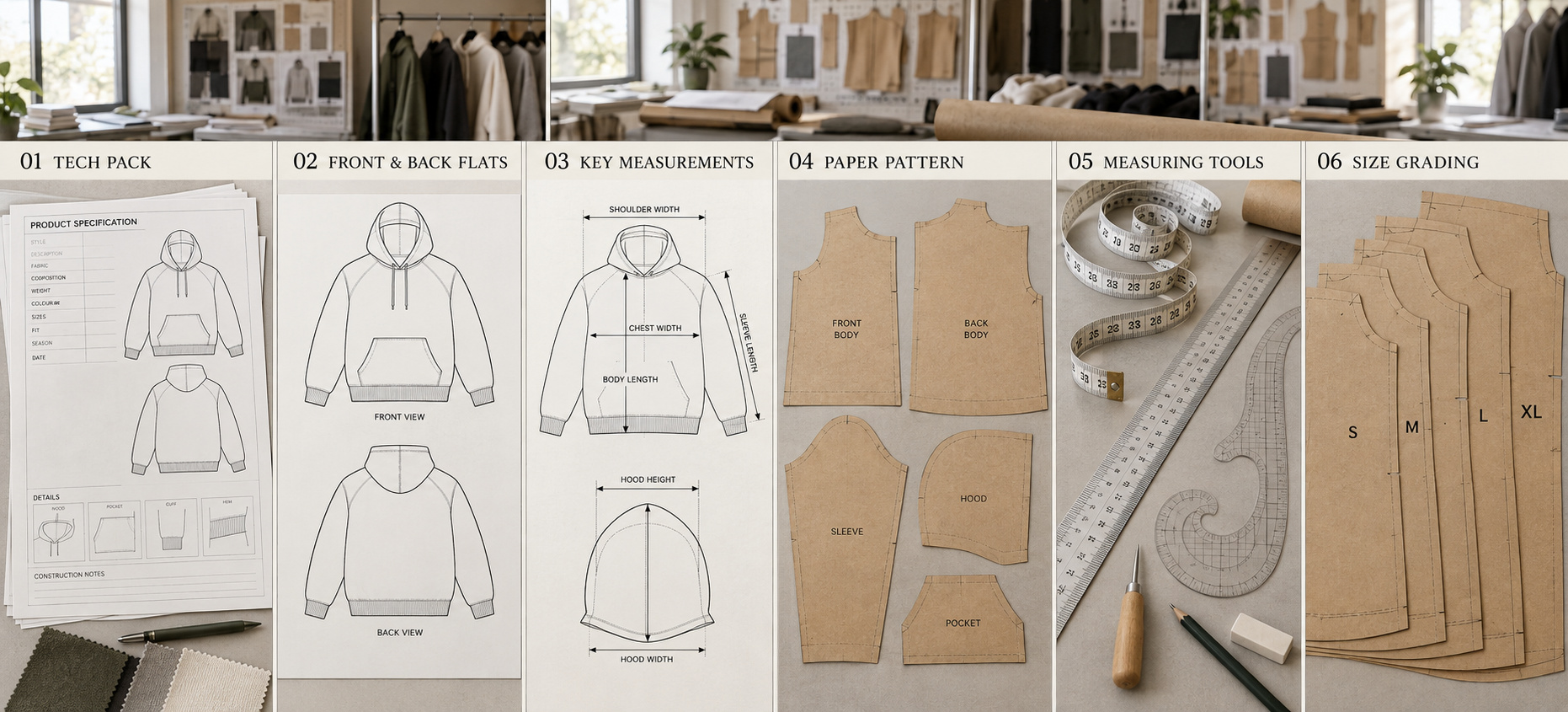 Measurement Points and Size Chart Review
A clear size chart helps reduce uncertainty during sampling and bulk production. Depending on the hoodie design, key measurement points may include:
- Chest width
- Body length
- Shoulder width
- Sleeve length
- Armhole depth
- Hood width and height
- Pocket size and position
- Cuff and hem dimensions
- Zipper length for zip-up hoodies
Measurement methods must remain consistent. Sleeve length, for example, may be measured from the shoulder seam or from the center back neck. The selected method should be clearly shown in the tech pack or measurement sheet.
The buyer should identify the base size, complete size range and required tolerances. Measurement tolerances are confirmed according to the fabric, garment construction and project requirements rather than applying one fixed standard to every order.
Regular, Oversized and Buyer-Defined Fits
Regular-fit hoodies generally require balanced chest, shoulder, sleeve and body measurements for everyday, promotional or wholesale programs.
Oversized hoodie development involves more than increasing the chest width. Shoulder drop, sleeve volume, armhole depth, body length, hood size and rib proportions must work together to create the intended silhouette.
Buyer-defined fits can be developed from a physical reference garment. We measure and review the reference before preparing a new pattern. Any required changes—such as a wider body, shorter length, deeper hood or different pocket position—should be specified before sampling.
Pattern Making and Size Grading
Approved base-size measurements are converted into pattern pieces for the front body, back body, sleeves, hood, pocket, cuffs and hem. Pattern development considers seam allowances, fabric thickness, stretch, shrinkage and garment construction.
After the base-size pattern is confirmed, it is graded across the required size range. Chest, shoulder, sleeve, body length, hood and pocket dimensions may require different grading rules. The same increase should not be applied mechanically to every measurement.
The manufacturing stage is explained further on our Pattern Making & Size Grading page.
Fit Sample Review and Revision
Basic hoodie samples usually take around 7–12 days. More customized developments normally require 10–18 days, depending on fabric sourcing, pattern complexity, fit revisions, trims and branding.
During sample review, buyers should check:
- Overall silhouette and garment balance
- Chest, length, shoulder and sleeve measurements
- Hood shape and neckline opening
- Sleeve and armhole proportions
- Pocket position
- Cuff and hem fit
- Fabric drape
- Garment symmetry
- Wearing ease
Revision comments should refer to specific measurements or construction details. Defined comments allow pattern changes to be applied more accurately than general instructions such as “make it larger” or “improve the fit.”
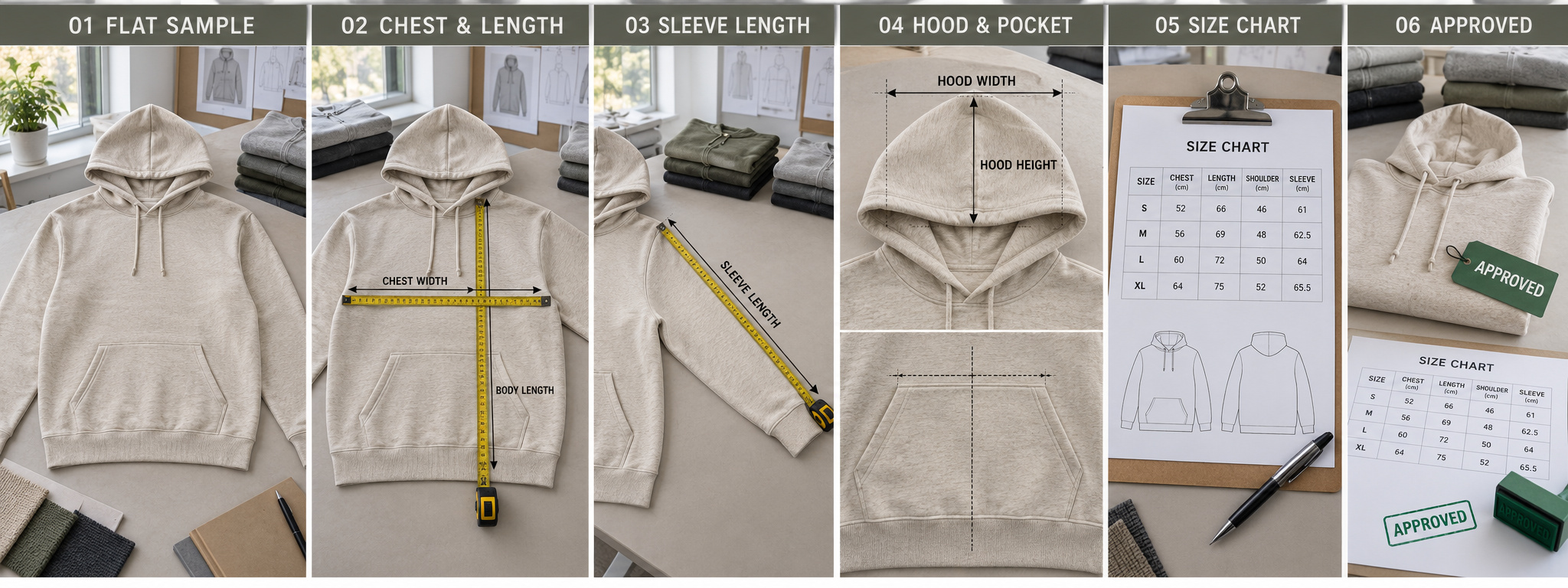 Pre-Production Approval and Bulk Control
Before bulk cutting, the buyer should approve the base-size sample, complete size chart, grading, fabric, construction and measurement tolerances. The approved sample and confirmed specifications then become references for production.
During bulk production, relevant measurements are reviewed through cutting, sewing and finishing stages. Finished garments are checked for key dimensions, symmetry, workmanship and overall appearance during Finishing & Measurement Inspection.
Standard programs usually start from 100–300 pieces per style. Custom fabrics, special colors or more complex private-label developments normally require 300–500 pieces per style/color or more. Bulk production is generally around 25–40 days after sample and specification approval.
Information Required for Fit Development
For an accurate review, buyers should provide the hoodie style, intended fit, target market, base size, complete size range, measurement chart, fabric preference, order quantity and available tech pack or reference sample.
These details allow us to assess the pattern work, sampling requirements, revisions, MOQ and production schedule before development begins.