
Turning Buyer Specifications Into Production Patterns
Pattern making converts a hoodie design, tech pack, size chart or reference garment into defined garment components for sampling and production. It determines how the body, sleeves, hood, pocket, rib and other parts fit together before fabric is cut.
This process is important for apparel brands, importers and private-label buyers developing regular, oversized, heavyweight, zip-up or children’s hoodies. A design can look correct in a drawing but still require pattern adjustment to achieve the intended fit, proportions and construction.
We review the available references before pattern development. A complete tech pack is preferred, but clear measurements, product photos, a physical garment or an approved sample can also support the initial review.
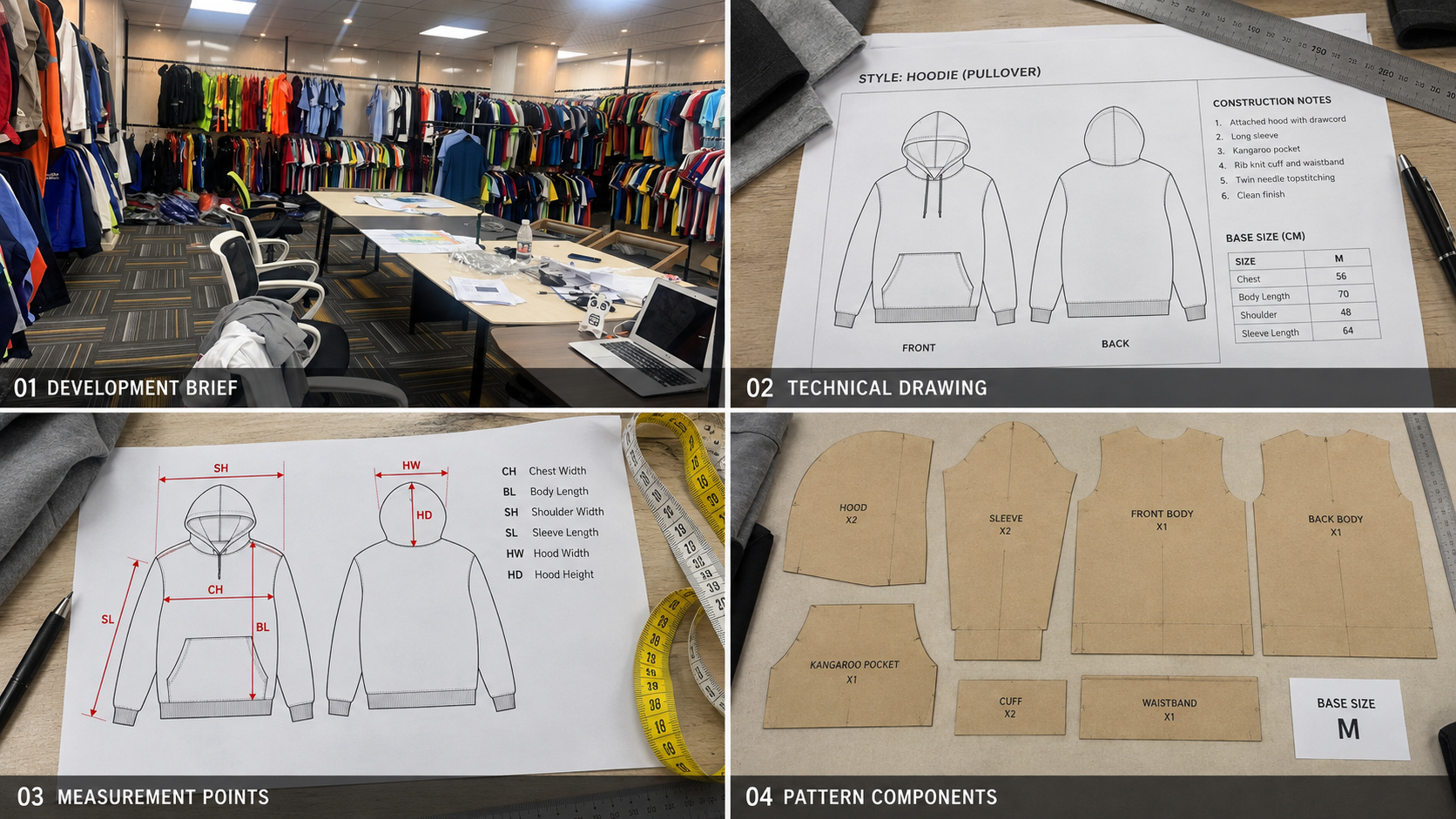 Establishing the Base Size
The base size is the first size developed and sampled before the full size range is graded. Buyers should identify the intended market, gender or age group, target fit and preferred base size.
Important measurement points may include chest width, body length, shoulder width, sleeve length, armhole, cuff opening, bottom opening, hood dimensions and pocket position. Zip-up styles also require front length and zipper alignment to be considered.
Regular and oversized hoodies use different proportions. An oversized fit may require changes to the shoulder drop, body width, sleeve volume and garment length rather than simply increasing the overall measurements. Buyers requiring a specific silhouette can review our Fit & Size Development process before sampling.
Pattern Development for Hoodie Components
A hoodie pattern normally includes front and back body panels, sleeves, hood sections, pocket components, cuffs and bottom rib. Additional pieces may be required for zippers, facings, panels, high collars or special constructions.
Pattern dimensions must account for the selected fabric, seam allowance and sewing method. French terry, brushed fleece and fabrics with different stretch or shrinkage behavior may require different handling. Rib dimensions also need to work with the main fabric so the cuffs and hem recover correctly without excessive tightness or waviness.
Logo placement, pocket position, seam lines and trim locations should be reflected in the approved development information. Changes made after pattern completion may require a revised pattern and another sample.
Size Grading Across the Range
Size grading creates the remaining sizes from the approved base pattern. Each measurement point follows an agreed increment rather than increasing every component by the same amount.
The chest, length, shoulder, sleeve, hood and opening measurements may use different grading rules. Children’s hoodies require particular attention because body proportions change across age and size groups. A broad adult size range may also need additional review at the smallest and largest sizes.
Before grading begins, the buyer should confirm the size chart, measurement method and acceptable tolerance. If measurements are taken differently by the buyer and factory, the same garment can produce different results.
Sample Review and Pattern Correction
The first sample is checked for overall balance, fit, construction and key measurements. The buyer should review the hoodie on the intended body type or fitting form and provide clear comments by measurement point.
Revisions may include body width, garment length, sleeve shape, hood depth, pocket placement or rib dimensions. Once the fit and measurements are approved, the corrected pattern and size chart become the reference for grading and bulk preparation.
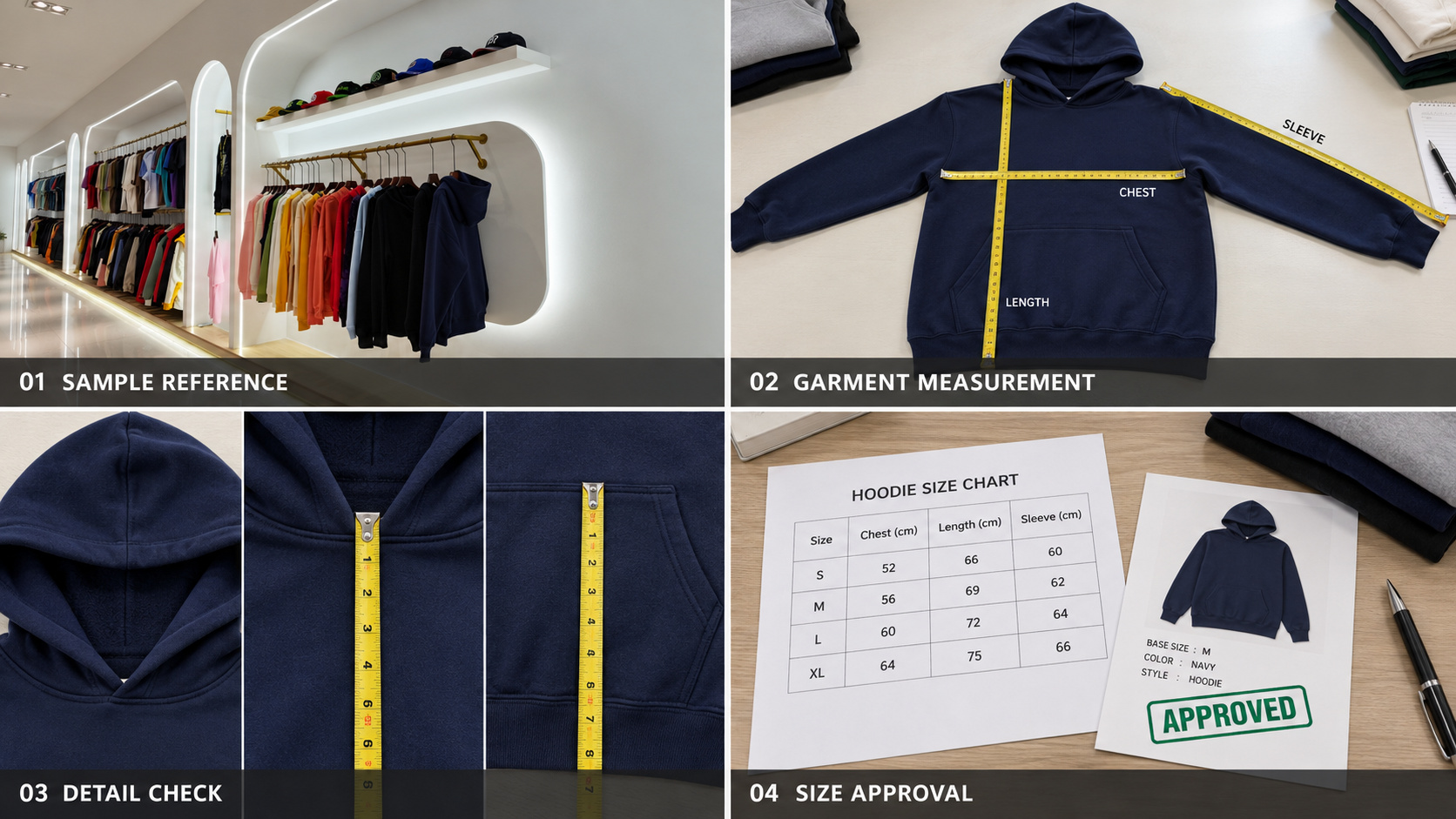 Preparing Patterns for Bulk Cutting
Approved patterns and graded size data are transferred to the cutting stage. Marker planning considers the fabric width, garment sizes, quantity ratio, fabric direction and component placement.
The confirmed pattern should not be changed during Fabric Spreading & Cutting unless a documented correction has been approved. Cut panels then move to Hoodie Sewing & Assembly, where component alignment and finished measurements are checked against the approved reference.
To begin pattern development, buyers should provide the hoodie style, intended fit, size range, measurement chart, fabric information and any tech pack or reference sample available. Clear base-size data reduces sample revisions and supports more consistent bulk production within the complete hoodie manufacturing process.