
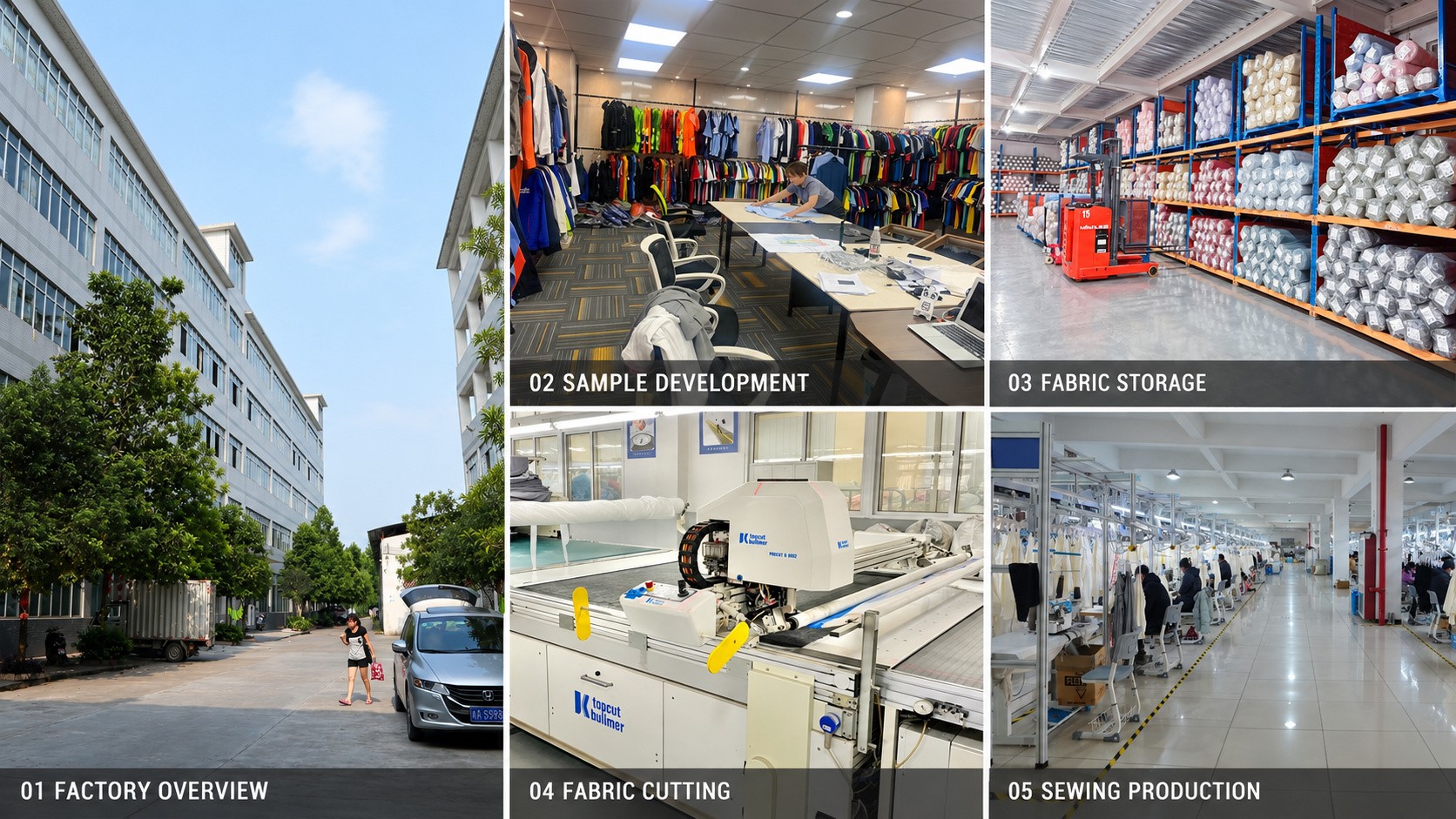
 Manufacturing Based on Approved Specifications
Drevanti manufactures blank, oversized, zip-up, heavyweight, fleece and French terry hoodies for apparel brands, importers, wholesalers, distributors and private-label buyers. Our production work covers material preparation, pattern development, cutting, sewing, logo application, finishing, inspection and export packing.
A bulk order does not begin from a product photo alone. Before production, we confirm the fabric composition, GSM, color, fit, size chart, construction, logo artwork, labels, trims and packaging requirements. The approved sample and confirmed order specification then become the main references for production and inspection.
Standard hoodie programs usually start from 100–300 pieces per style. Programs involving custom-dyed fabrics, special colors or more complex private-label details may require 300–500 pieces per style or color. The final MOQ depends on material availability, color development, construction and decoration requirements.
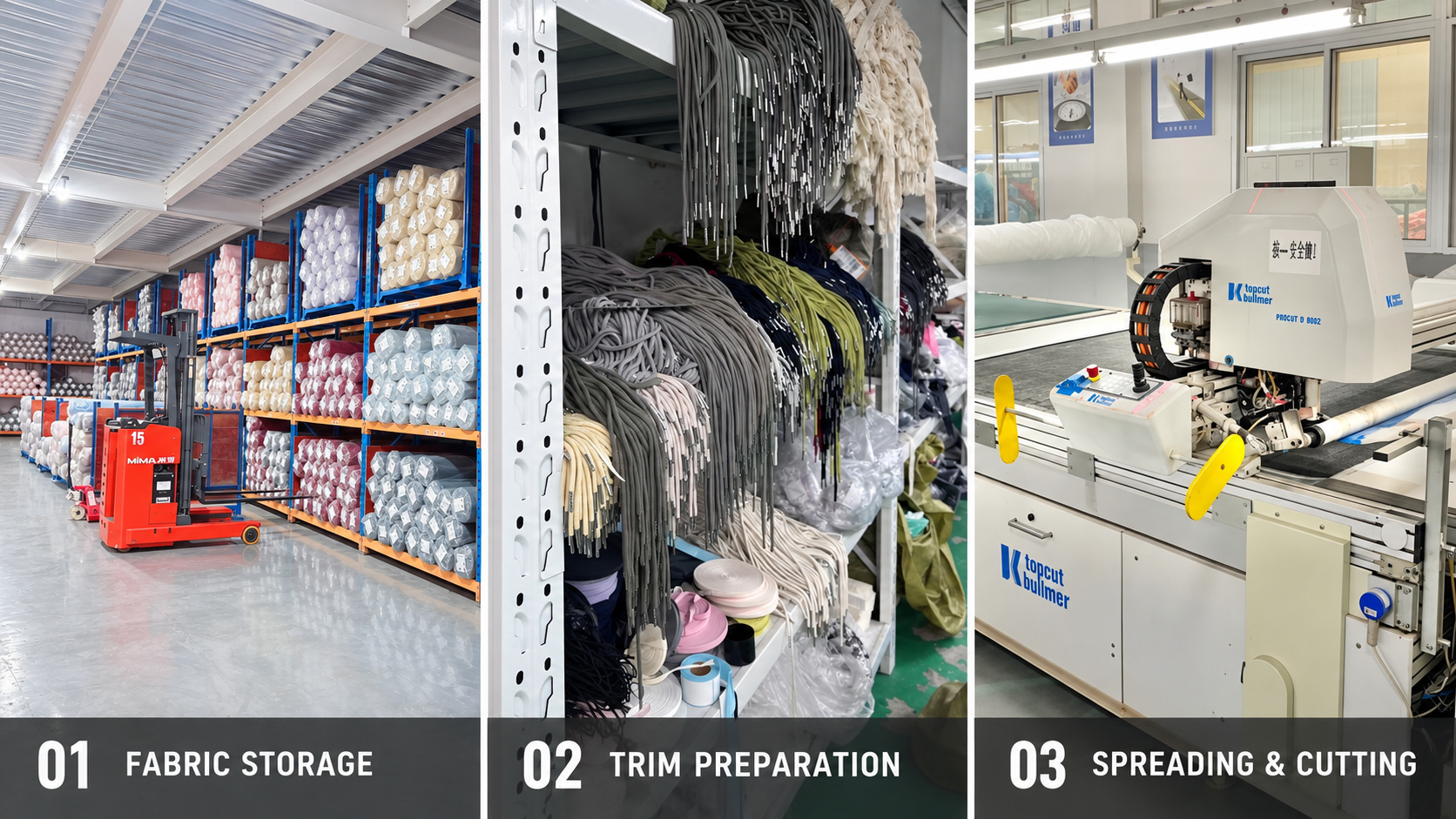
Fabric Inspection and Material Preparation
Fabric affects the weight, handfeel, shrinkage, appearance and wearing performance of a hoodie. Cotton, cotton/polyester blends, CVC, French terry, brushed fleece, polyester fleece and matching rib fabrics can be selected according to the required season, price point and product positioning.
Before cutting, incoming fabric is reviewed against the confirmed order requirements. Relevant checks may include composition, GSM, shade, handfeel, usable width and visible surface defects. Main fabric and rib should also be compared because inconsistent shades or stretch performance can affect the finished garment.
For programs with specific testing requirements, third-party composition, colorfastness or shrinkage testing can be arranged according to the buyer’s instructions. More details are covered on our Fabric Inspection & Preparation page.
 Pattern Making, Grading and Cutting
Patterns are developed from the approved sample, tech pack, size chart or reference garment. Important points include body width, garment length, shoulder shape, sleeve length, armhole, hood construction, pocket position and rib dimensions.
Size grading must follow the confirmed measurement increments rather than simply enlarging every part by the same amount. Oversized hoodies, children’s hoodies and zip-up styles each require different attention to proportion, balance and component placement.
After pattern and size information are confirmed, fabric is spread and cut according to the approved specifications. Fabric direction, shade grouping, panel alignment and cutting accuracy are controlled before cut components move to sewing. Accurate preparation at this stage helps reduce measurement variation and assembly problems during bulk production.
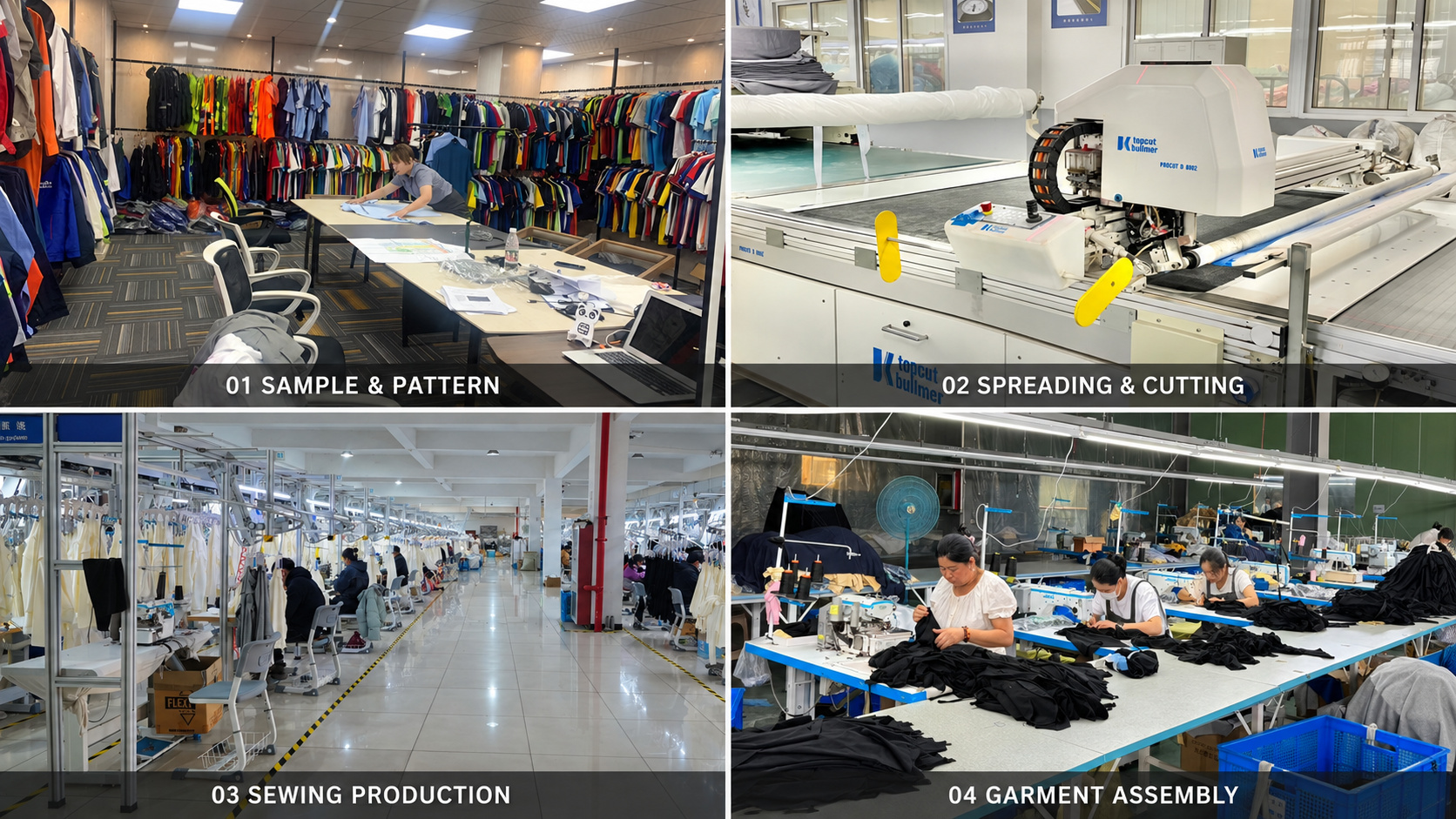
Hoodie Sewing and Assembly
Hoodie assembly normally includes shoulder joining, sleeve attachment, side seams, hood construction, pocket attachment, rib application and other operations required by the style. Zip-up hoodies also require zipper alignment, front opening balance and additional checks around the zipper and hem.
Suitable lockstitch, overlock, coverstitch, flatlock and bar-tack operations are selected according to the garment construction. Stitch type, seam allowance, reinforcement points and workmanship standards should be defined during sample approval.
During Hoodie Sewing & Assembly, production teams compare bulk garments with the approved sample and confirmed construction details. Particular attention is given to seam appearance, symmetry, pocket placement, hood shape, drawcord position and rib attachment.
 Printing, Embroidery and Branding Application
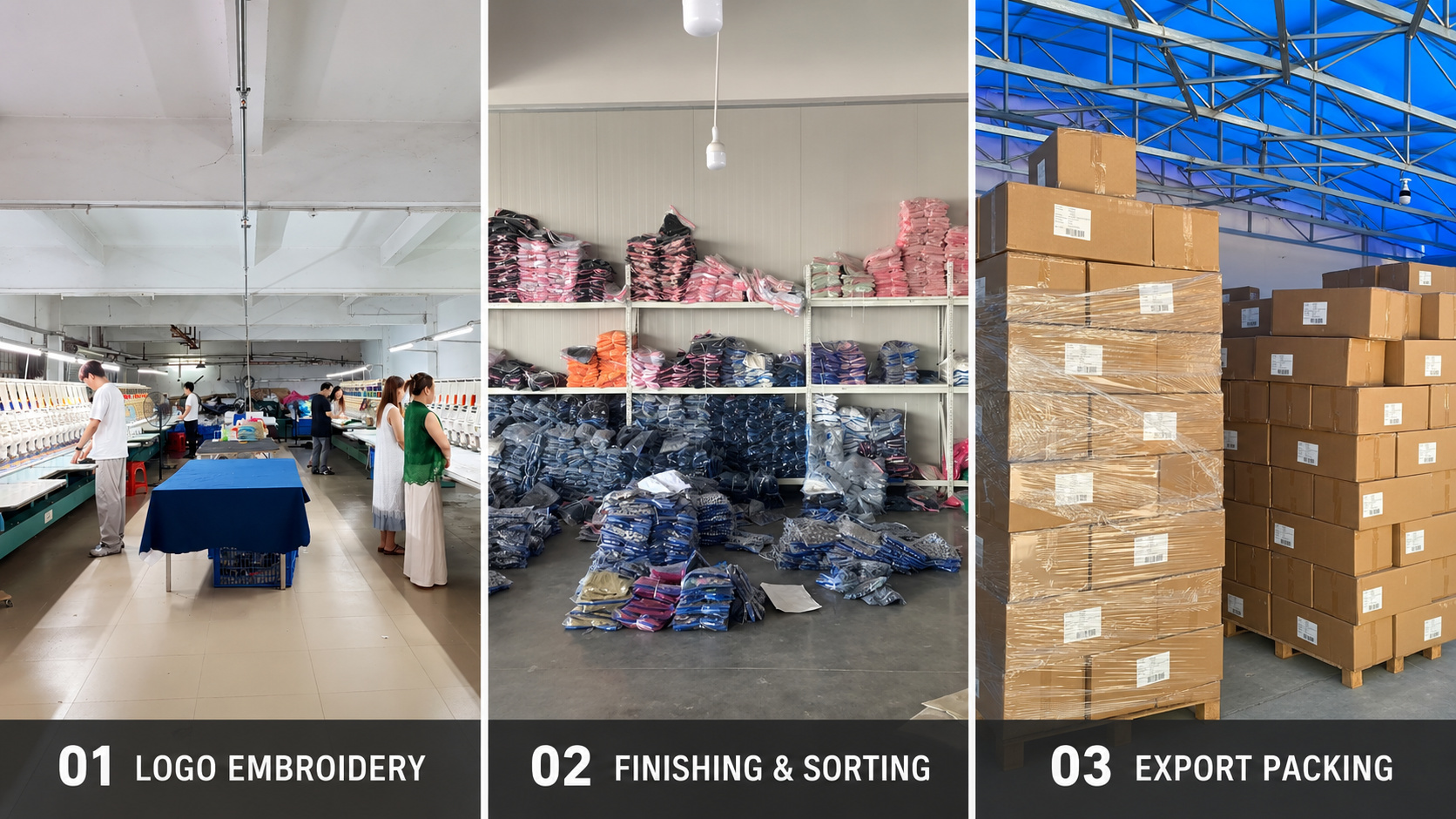
Printing, embroidery and patches are prepared from approved artwork, dimensions, colors and placement references. Logo appearance can change depending on fabric surface, garment color, fleece thickness and the selected application method.
A logo sample should be reviewed before bulk decoration. The buyer should confirm the artwork size, Pantone color where applicable, placement distance and final appearance on the selected fabric. Bulk decoration is then checked for color, position, edge quality, stitching condition and consistency.
Our Printing & Embroidery page explains how approved artwork and placement information are transferred into production.
Finishing, Inspection and Packing
After sewing and decoration, garments move through thread trimming, appearance review, measurement checking and packing preparation. Key measurements are compared with the approved size chart and agreed tolerance. Workmanship checks cover stitching, seams, hood shape, pockets, zippers, rib, drawcords and overall garment appearance.
Labels, hangtags, barcodes and packaging details are checked against the confirmed order specification. Needle detection can be used when required by the buyer. Final inspection may include appearance, measurements, quantity, size assortment, logo position and carton packing verification.
Individual polybags, size stickers, barcode labels, branded bags and export cartons can be prepared according to the order program. Buyers may also arrange third-party inspection before shipment. Further inspection details are available on our Finishing & Measurement Inspection page.
 Production Lead Time and Order Preparation
Bulk production is normally around 25–40 days after the sample, materials and complete order specifications are approved. Custom fabrics, special colors, complex decoration, large size ranges or peak production periods may require additional time.
For an initial manufacturing review, buyers should provide the hoodie style, quantity per color, fabric composition, target GSM, size range, artwork, labels, packaging requirements, destination and requested delivery window. Clear information allows us to evaluate material availability, sampling requirements, MOQ, production time and packing arrangements before confirming the order.