
Logo Development for Branded Hoodie Orders
Drevanti develops printed, embroidered and patch-based hoodie branding for apparel brands, streetwear labels, importers, wholesalers and private-label buyers.
Logo development begins with the buyer’s artwork, required dimensions, colors and placement. The fabric composition, GSM, hoodie construction and order quantity are then reviewed to determine whether the requested branding method is suitable.
A digital mockup helps define the approximate position and scale, but the physical result should be confirmed on the selected fabric before bulk production.
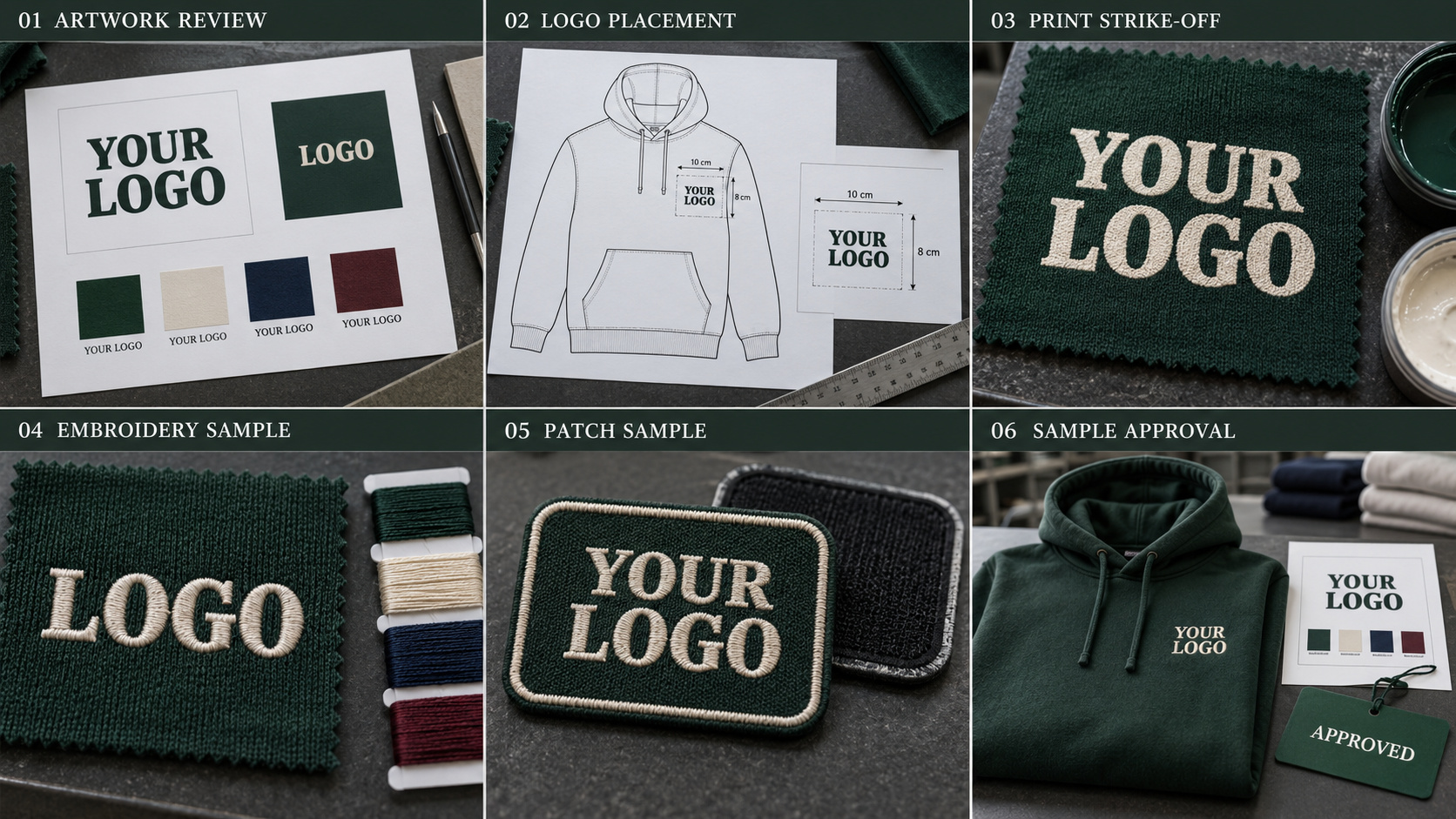 Artwork and Placement Requirements
Buyers should provide vector artwork where available, together with the logo size, color references and required garment position. If only a raster image is available, its resolution and edge quality should be checked before sampling.
Common hoodie logo positions include:
- Center chest
- Left chest
- Full front
- Back
- Sleeve
- Hood
- Neck area
Logo position should be defined using measurements from a stable garment reference point rather than visual estimation alone. Oversized hoodies, kids’ hoodies and zip-up styles may require different placement because their proportions and construction are not the same.
Printing on Hoodie Fabrics
Printing is suitable for many graphic, text and multi-color logo applications. The finished effect depends on the fabric surface, color, stretch, GSM and artwork detail.
French terry, brushed fleece and cotton-blend fabrics may produce different print surfaces. A smooth fabric face normally provides a different result from a heavily textured or brushed material.
Dark garment colors may also require different ink preparation from light colors. Buyers should confirm the fabric and color through Fabric & GSM Customization before approving the final print sample.
Embroidery and Patch Options
Embroidery provides a textured, stitched appearance and is commonly used for chest, sleeve, hood or smaller brand details. Stitch density, thread color, logo size and fabric thickness affect the final result.
Very small lettering or complex artwork may need to be simplified for clearer stitching. Large or dense embroidery can also add stiffness or weight to the garment area.
Patches can be developed as separate branded components and attached at the approved position. Patch size, shape, edge construction, backing and attachment method should be confirmed during sampling.
Logo Sample and Approval
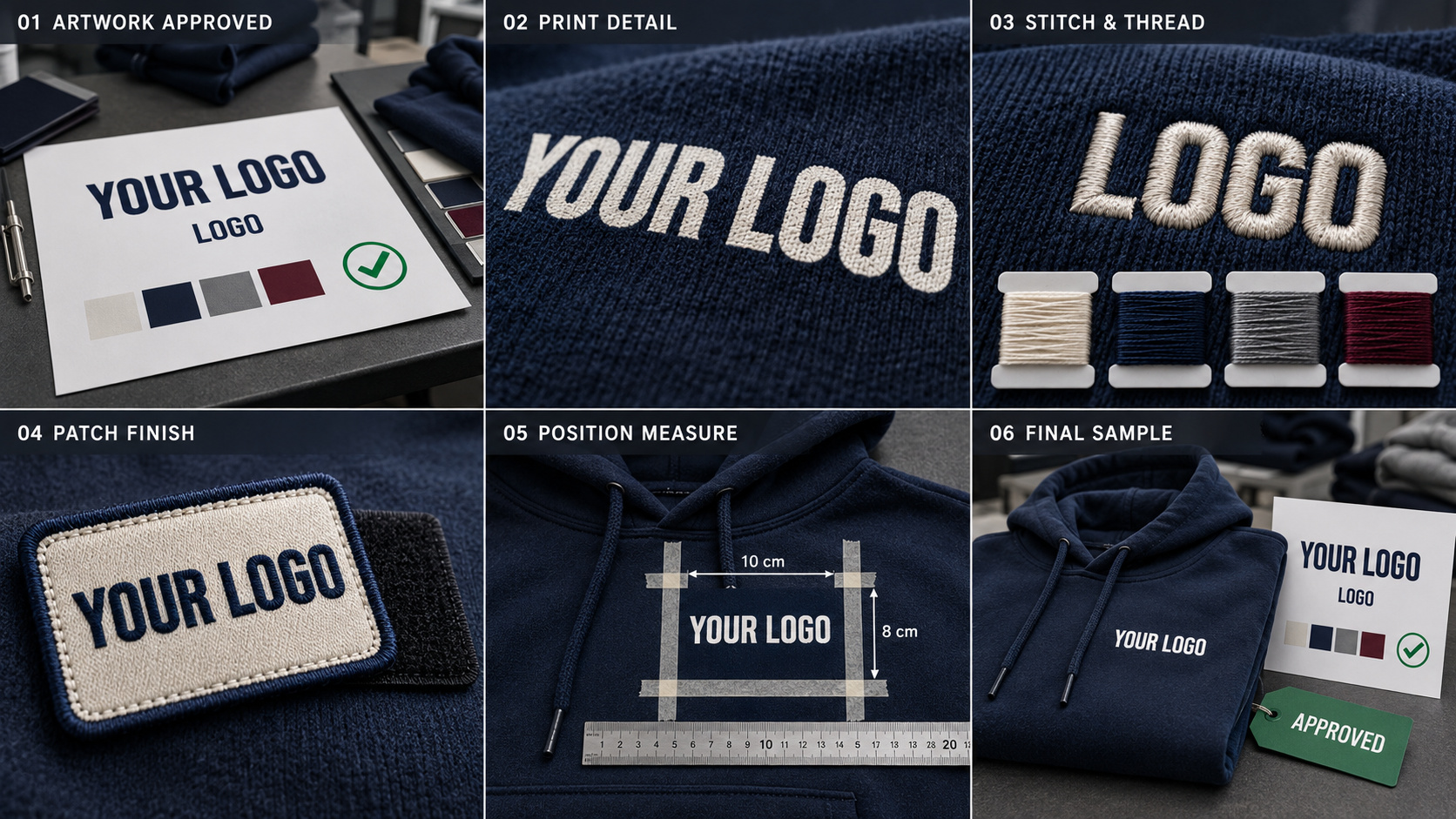
Logo samples should be reviewed for:
- Overall dimensions
- Color
- Artwork proportion
- Print coverage
- Embroidery stitch appearance
- Patch edge and attachment
- Position on the garment
- Alignment and symmetry
- Appearance on the selected fabric
The logo should be checked together with the hoodie sample rather than approved only as a separate fabric swatch. This confirms how the branding works with the pocket, zipper, seam lines and garment proportions.
 Bulk Logo Production and Inspection
After approval, the confirmed artwork, size, colors and placement become production references. The bulk branding stage is coordinated with cutting and sewing according to the garment construction.
More information about this production stage is available under Printing & Embroidery.
During production, relevant checks cover logo size, color, position, print appearance, embroidery quality and patch attachment. Finished garments are also reviewed through Finishing & Measurement Inspection before packing.
MOQ, Sampling and Quotation Information
Standard hoodie programs usually start from 100–300 pieces per style. More complex branding, custom fabrics, special colors or private-label programs normally require 300–500 pieces per style/color or more.
Basic samples usually take around 7–12 days. More customized logo and garment developments generally require 10–18 days. Bulk production is normally around 25–40 days after sample and specification approval.
For an accurate quotation, buyers should provide the hoodie style, fabric, GSM, garment color, order quantity, logo artwork, logo dimensions, colors, placement, label requirements and delivery destination.