
Turning Approved Artwork Into Production Details
Printing and embroidery add logos, graphics and branded details to blank, oversized, heavyweight, fleece and private-label hoodies. The result depends on more than the artwork alone. Fabric composition, GSM, surface texture, logo size, color count and placement all affect the suitable application method.
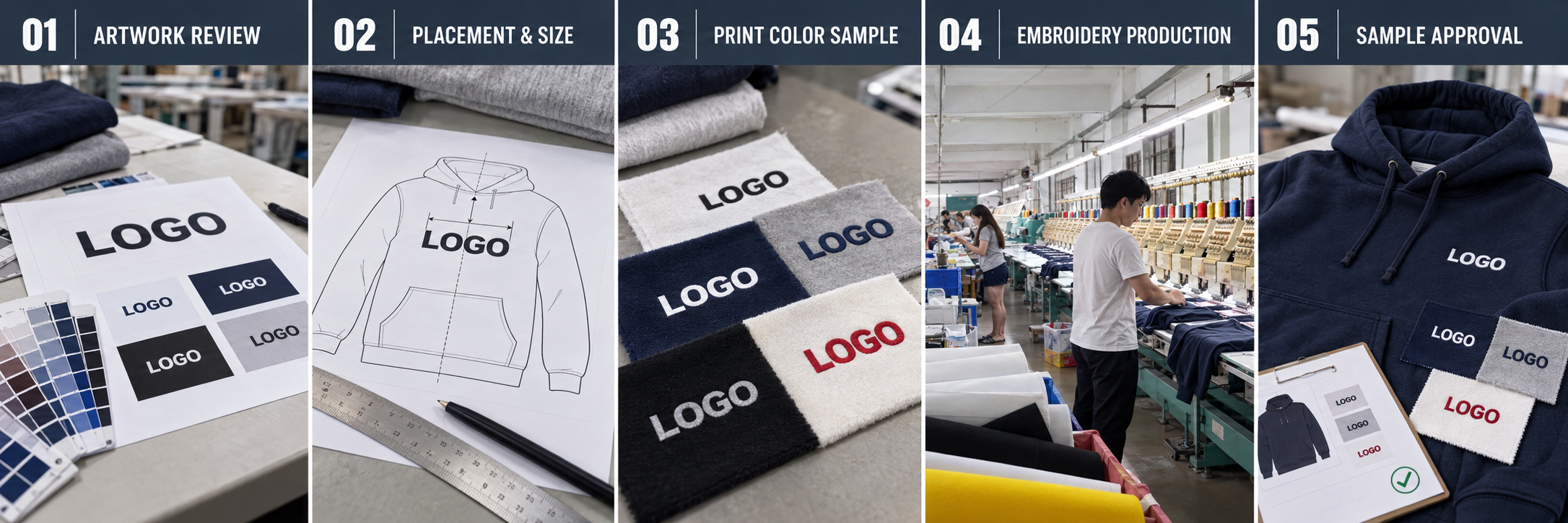
Before production, we review the buyer’s artwork, required dimensions, color references and placement instructions. Vector artwork is preferred because it helps maintain clean outlines and accurate proportions when preparing print files or embroidery digitizing.
Buyers can review the available branding directions on our Logo Printing & Embroidery page before confirming the production method.
 Selecting a Method for the Fabric
The branding method should match the selected hoodie fabric and intended appearance. Smooth cotton surfaces may produce different results from brushed fleece, polyester blends or heavily textured materials.
Printed graphics may require adjustments to ink type, underbase, curing conditions or artwork detail according to the fabric color and composition. Embroidery requires suitable thread colors, stitch density and backing so the finished area remains stable without excessive stiffness or puckering.
Heavy designs can affect the drape and handfeel of the garment. Very small text, narrow lines and complex color gradients may also require artwork adjustment. Fabric and surface suitability should therefore be reviewed together with the Fabric & GSM Customization details.
Artwork, Color and Placement Approval
Buyers should provide editable artwork where possible, together with the required logo width, height and placement. Useful references include the distance from the neckline, shoulder seam, center front, pocket edge or sleeve seam.
Pantone references can be used when defined brand colors are required, but the appearance may vary between screen color, printed ink, embroidery thread and the garment fabric. A physical sample or production color reference provides a clearer basis for approval.
For embroidery, a digitized file is prepared to define stitch direction, density and sequence. For printing, the production file is separated or prepared according to the selected method and artwork colors.
Sample Development Before Bulk Production
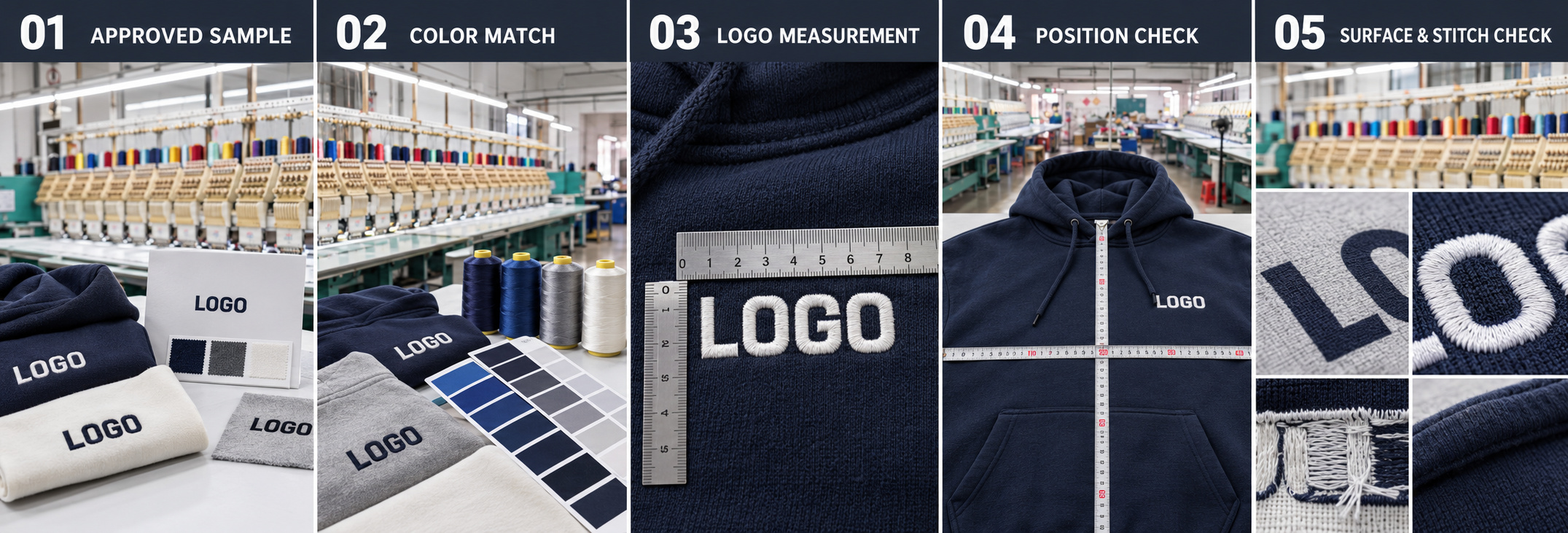
A logo sample or decorated garment sample should be approved before the bulk order proceeds. The review should cover dimensions, position, color, surface appearance, embroidery coverage and the way the decoration behaves on the actual fabric.
Approval comments should be specific. Instead of requesting that a logo be “slightly larger,” buyers should confirm the required finished width and placement measurement. Changes to artwork, size, colors or positioning after approval can affect sample time, material use and the production schedule.
Decorated panels are coordinated with the Hoodie Sewing & Assembly stage. Placement must account for seams, pockets, zippers, hoods and other construction details before panels are assembled.
Bulk Printing and Embroidery Control
Bulk production follows the approved artwork, color reference, placement specification and decorated sample. Checks are made during production to identify color variation, incomplete coverage, blurred edges, incorrect positioning, loose embroidery threads or fabric distortion.
The first production pieces should be compared with the approved reference before the full quantity continues. Selected pieces can then be checked during the run to reduce repeated variation across the order.
 Inspection Before Finishing
Completed decoration is checked for logo size, position, color, appearance and workmanship. Printed areas are reviewed for visible cracking, uneven coverage, marks or damaged fabric. Embroidery is checked for thread trimming, edge definition, puckering and the condition of the garment reverse side.
After decoration and assembly, garments move to Finishing & Measurement Inspection for overall appearance and measurement checks.
For a production review, buyers should provide the artwork file, logo dimensions, Pantone references, placement details, hoodie fabric, order quantity and required delivery timing. These details help confirm the suitable process, sampling requirements, production cost and lead time.