
Preparing Approved Fabric for Cutting
Fabric spreading and cutting transfer the approved hoodie pattern into production-ready garment components. Accuracy at this stage directly affects finished measurements, seam alignment, pocket position, fabric use and the consistency of bulk orders.
Before spreading begins, the fabric, pattern, color, size ratio and production quantity should already be confirmed. The cutting team works from the approved sample, graded patterns and order specification rather than making independent changes during production.
Cotton, CVC, French terry, brushed fleece and polyester-blend fabrics may behave differently during handling. Fabric weight, stretch, surface direction and finishing method are considered when preparing the cutting plan.
 Fabric Batch and Shade Control
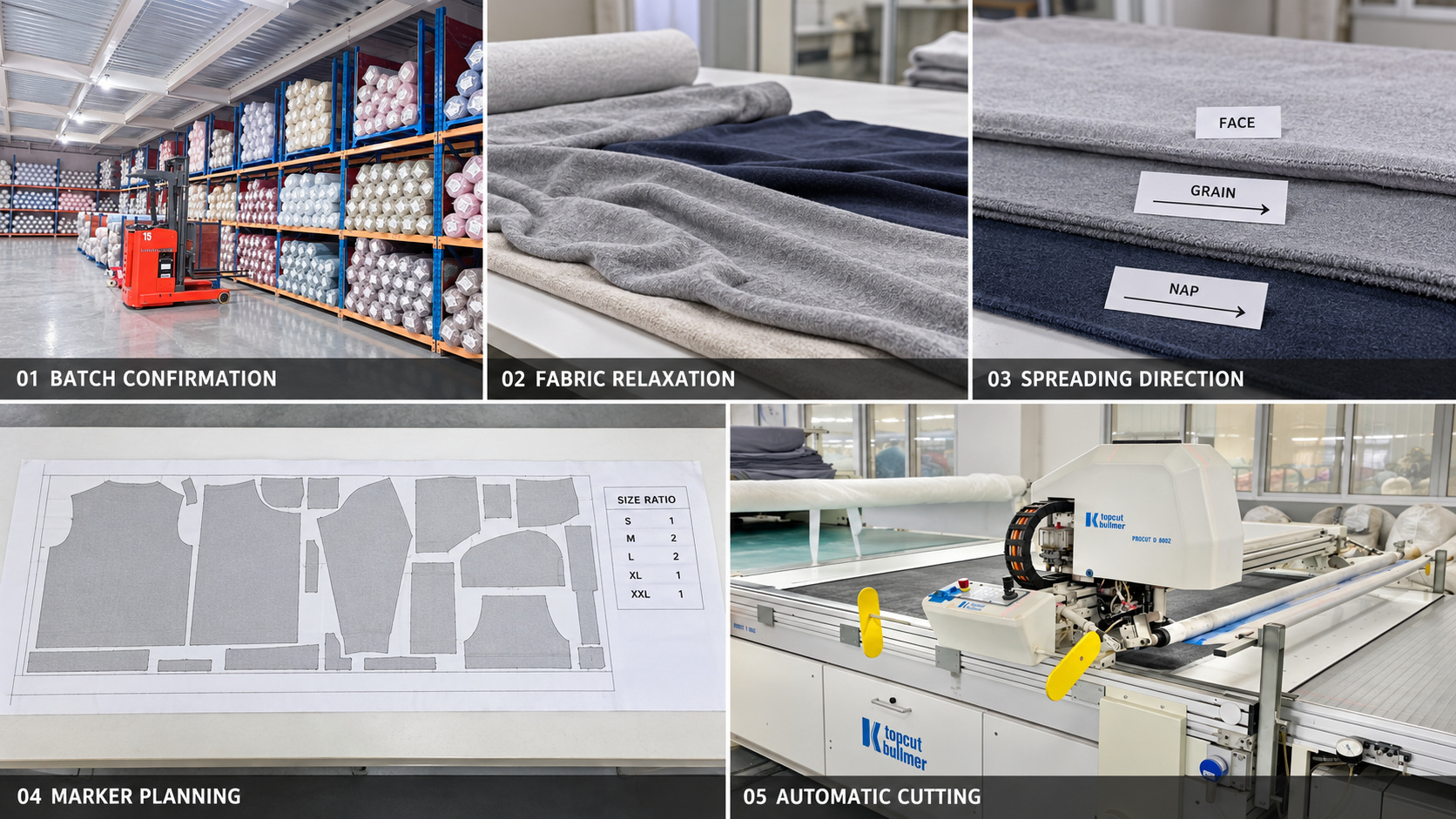
Fabric rolls are identified by style, color and production batch before they are released for cutting. Rolls with visible shade differences should not be mixed without review because panels from different shades may create an inconsistent finished garment.
Main fabric and matching rib are also checked against the approved reference. This is especially important for cuffs, waistbands and neck or hood components where color and stretch differences are easy to notice.
Relevant material checks are completed during Fabric Inspection & Preparation. Any material issue that may affect appearance, measurements or cutting efficiency should be addressed before spreading.
Fabric Relaxation and Spreading Direction
Knitted fabric may require appropriate relaxation before cutting. The handling time and method depend on the fabric construction, finish and order requirements. Fabric should not be pulled or stretched excessively during spreading because tension can affect panel dimensions after cutting.
The face direction, knit direction and surface nap are considered when arranging the layers. Brushed fleece and fabrics with a visible directional surface require consistent orientation to reduce shade or texture differences between garment components.
Layer height also depends on fabric thickness, stability and cutting requirements. Heavy fleece and lighter French terry cannot always use the same spreading arrangement.
Marker Planning and Size Ratio
Marker planning determines how graded pattern pieces are arranged across the usable fabric width. It considers the order quantity, size assortment, fabric direction, component placement and required cutting quantity.
The size ratio must match the confirmed order breakdown. If the order includes S, M, L and XL in different quantities, the marker and cutting plan should reflect that ratio. Incorrect size planning can create shortages in one size and excess components in another.
Approved graded patterns are supplied through the Pattern Making & Size Grading stage. Pattern dimensions should not be adjusted at the cutting table unless a documented revision has been approved.
Cutting Accuracy and Component Control
Cutting follows the approved marker and pattern information. The cutting team checks panel outlines, notches, pocket positions and other reference points required for sewing.
A typical pullover hoodie may include front and back body panels, sleeves, hood sections, kangaroo-pocket pieces, cuffs and waistband components. Zip-up styles require additional attention to front-panel balance, zipper length and alignment.
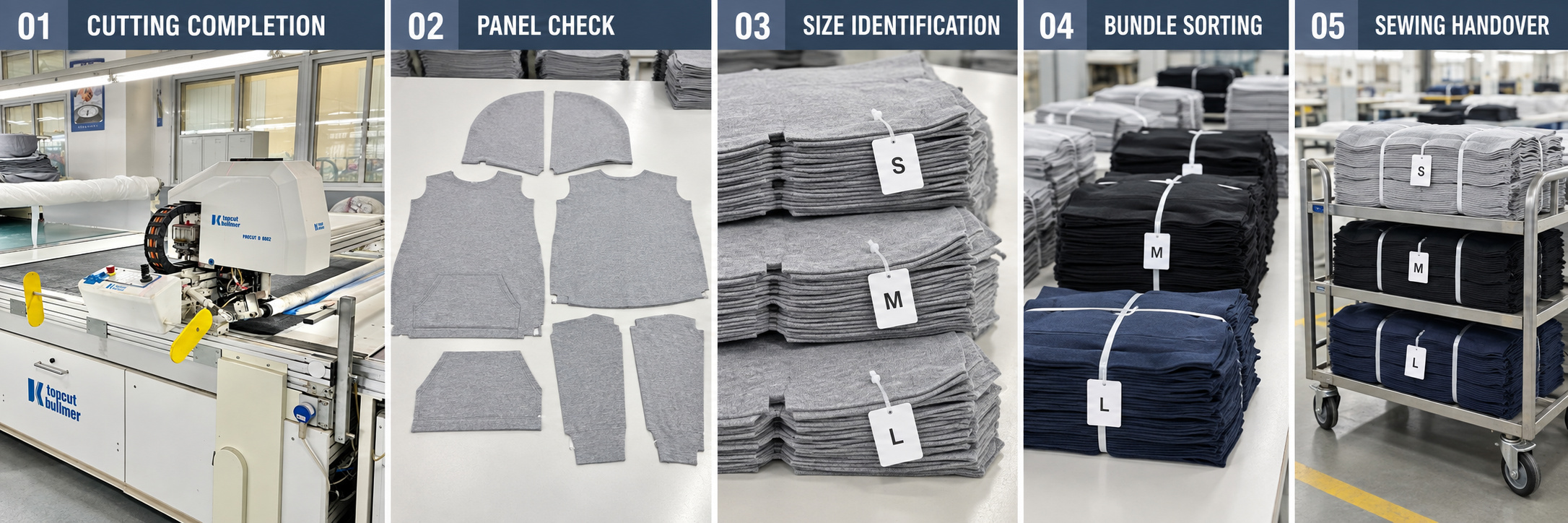
After cutting, components are reviewed for obvious cutting errors, damaged edges, missing notches or incorrect quantities. Cut parts are then grouped and identified by style, color, size and production batch.
 Preparing Cut Parts for Sewing
Cut components must remain organized when transferred to production. Size labels or bundle identification help prevent different sizes, shades or style components from being mixed on the sewing line.
Logo applications that must be completed before assembly are also considered at this stage. For example, a front-panel print or embroidery may need to be applied while the component is still flat. Placement information should follow the approved artwork and pattern reference.
The prepared bundles then move to Hoodie Sewing & Assembly, where component matching, seam construction and garment measurements are checked during production.
For cutting preparation, buyers should confirm the final size breakdown, approved pattern, fabric specification, color, order quantity and any directional or placement requirements. Clear information helps reduce recutting, material waste and production delays within the complete hoodie manufacturing process.