
Fabric Checks Before Hoodie Production
Fabric inspection and preparation establish the material reference for a hoodie order before bulk cutting begins. This page is intended for apparel brands, importers, wholesalers and private-label buyers sourcing blank, oversized, fleece, French terry or zip-up hoodies.
Incoming fabric is reviewed against the approved sample and confirmed order specification. The relevant reference may include fabric composition, target GSM, approved color, handfeel, surface structure and matching rib. These checks help identify visible material differences before the fabric is committed to bulk production.
The inspection method and required testing depend on the order. Standard factory checks do not replace laboratory testing when a buyer requires formal composition, shrinkage or colorfastness results.
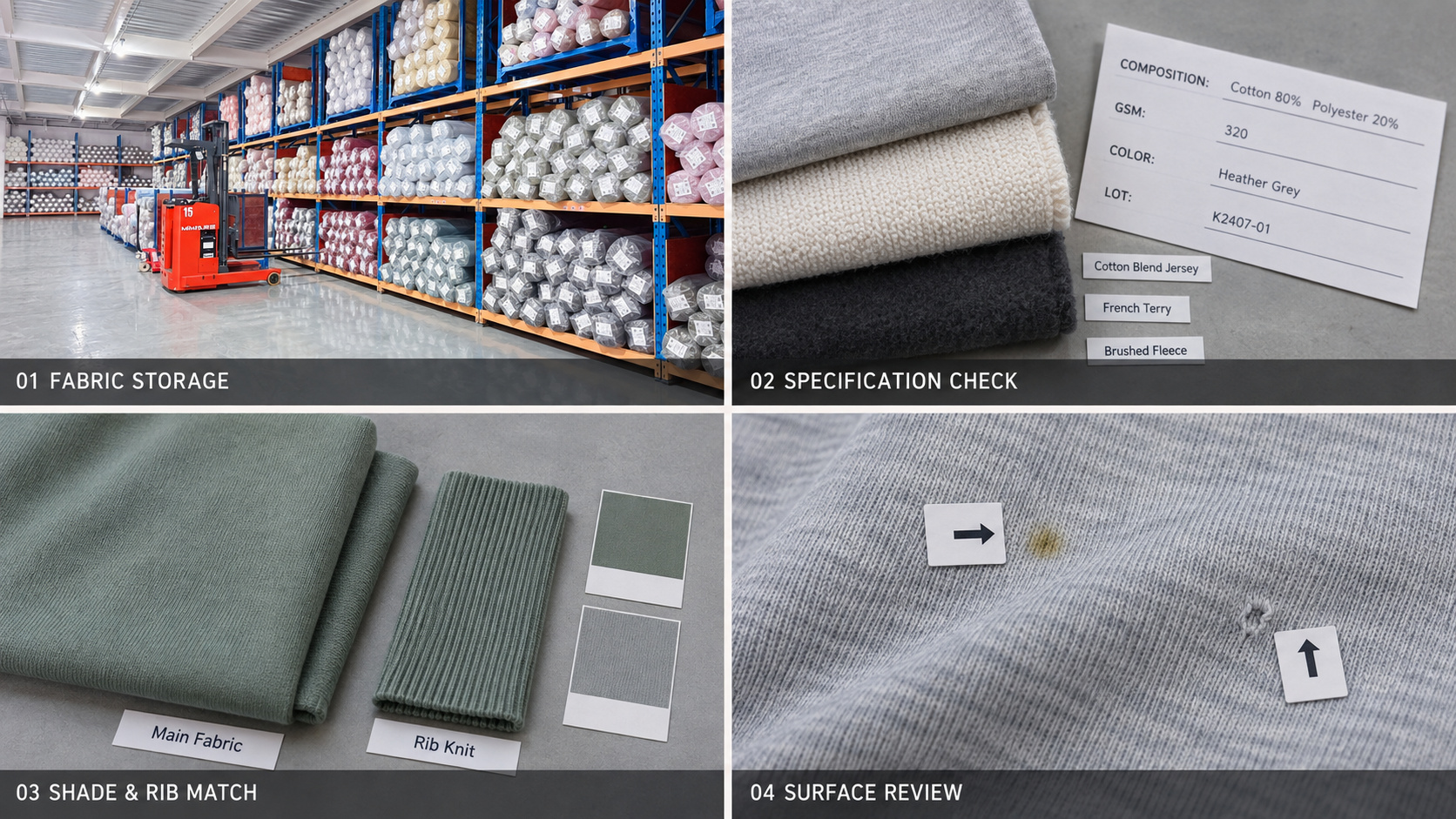 Confirming Fabric Composition and GSM
Common hoodie materials include cotton, cotton/polyester blends, CVC, French terry, brushed fleece, polyester fleece and matching rib fabrics. The correct option depends on the target season, garment structure, handfeel, performance expectations and price range.
GSM affects warmth, drape, thickness, packing volume and finished garment cost. A heavyweight oversized hoodie and a lightweight promotional hoodie cannot be evaluated using the same fabric standard. GSM should therefore be confirmed together with the composition, knit construction and finishing method.
Buyers developing a new fabric can review available options through our Fabric & GSM Customization process. Custom knitting, dyeing or special finishes may affect MOQ, sampling time, fabric lead time and the final quotation.
Shade, Handfeel and Surface Review
Fabric color is compared with the approved reference under suitable lighting. Where Pantone development or lab dips are involved, the approved color sample should remain available as the production reference.
Different fabric lots can show shade variation, especially after dyeing or finishing. Rolls may therefore need to be identified and grouped before spreading so that obvious shade differences are not mixed within the same garment or packing assortment.
The fabric surface is also reviewed for visible defects such as stains, holes, uneven knitting, marks, excessive creasing or inconsistent brushing. Handfeel and fleece appearance are compared with the approved sample where applicable. Main fabric and rib are checked together because differences in color, stretch or recovery can affect the neckline, cuffs and hem.
Shrinkage and Third-Party Testing
Shrinkage can influence body length, chest width, sleeve length and the balance between main fabric and rib. When shrinkage requirements are important, the testing method, wash conditions and acceptable result should be confirmed before production.
Third-party testing for fiber composition, colorfastness or shrinkage can be arranged when requested by the buyer. The testing scope, standard, sample quantity, cost and additional lead time should be agreed before submission. We do not assume certification or laboratory requirements unless they are included in the order specification.
Fabric Relaxation and Cutting Preparation
Knitted fabrics may require suitable handling or relaxation before spreading and cutting. The preparation method depends on the fabric construction, finish and order requirements. Rolls are organized according to style, color and production batch before being released to the cutting stage.
The production team uses the approved pattern and confirmed size information to plan spreading and cutting. Fabric direction, panel orientation, shade grouping and usable width must be considered because they influence material consumption and garment consistency.
After preparation, the material moves to Fabric Spreading & Cutting. Pattern dimensions and size grading should already be confirmed through Pattern Making & Size Grading before bulk cutting begins.
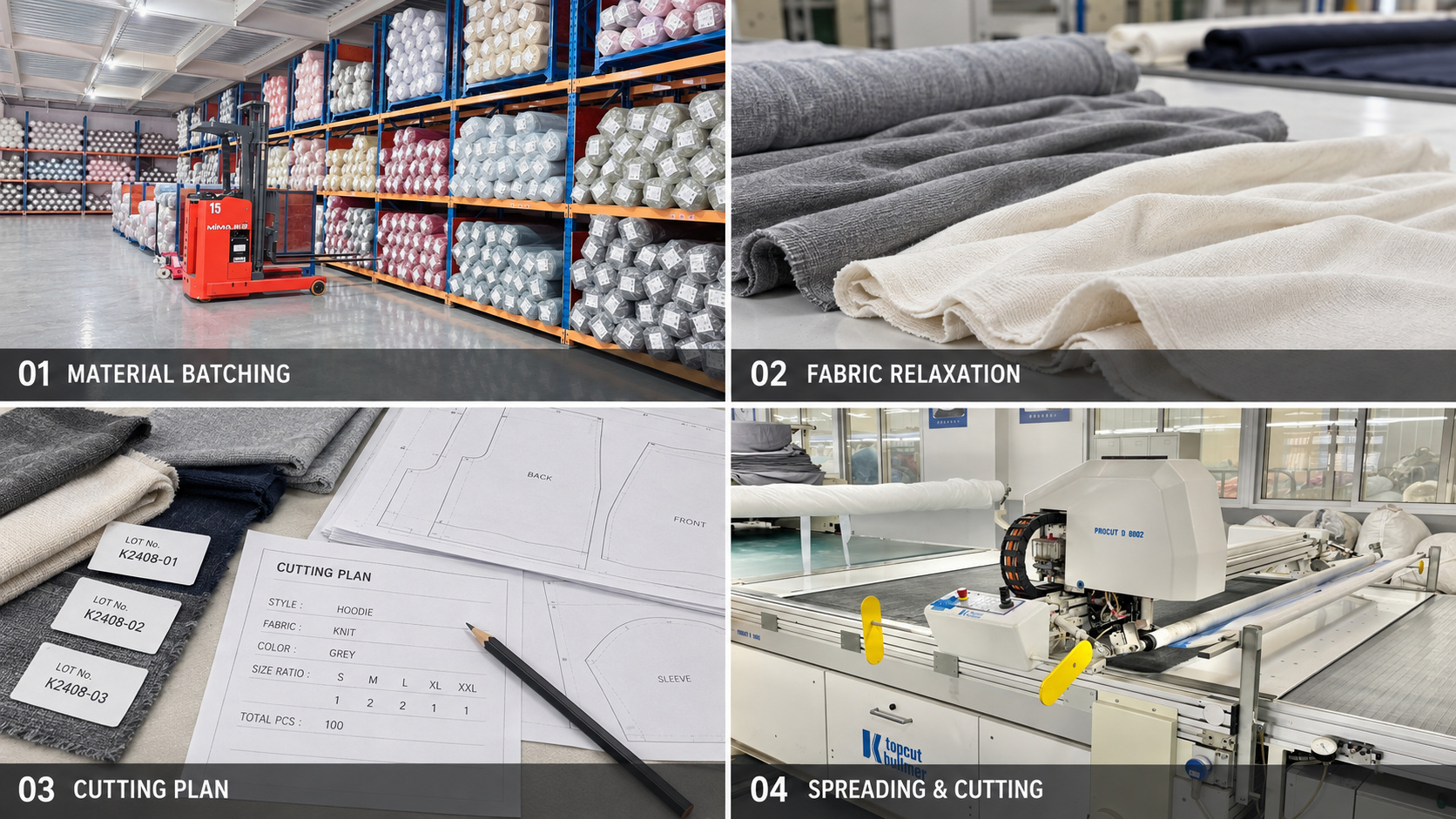 Information Needed Before Material Approval
For an accurate material review, buyers should provide the preferred composition, target GSM, color reference, required handfeel, intended season, order quantity and any testing requirements. A tech pack, approved sample or fabric reference is particularly useful when appearance and performance must match an existing product.
Custom colors, special finishes, uncommon compositions and low-volume fabric developments may require a higher MOQ or longer preparation time. Confirming these points before sampling helps reduce fabric changes, quotation revisions and production delays.
Once the fabric, rib, color and relevant test requirements are approved, the confirmed material specification becomes part of the production reference used throughout our broader hoodie manufacturing process.